Job board aggregators simplify job hunting by collecting job listings from multiple sources - like company websites, job boards, and staffing agencies - and organizing them into a single searchable platform. Think of them as search engines specifically for job postings. Instead of visiting multiple sites, you can find millions of opportunities in one place.
Here’s why they matter:
- For Job Seekers: Save time, access a broader range of opportunities, and search using filters like location, salary, and job type.
- For Employers: Reach a larger talent pool through the aggregator's collected audience, reduce costs with performance-based advertising, and streamline the hiring process. (Distribution is a separate job: employers who want one opening on many boards at once use job posting software for that.)
Aggregators differ from regular job boards by pulling listings from external sources, offering higher job volume but less control over listings. They make money through clicks or applications rather than charging for postings. Platforms like Indeed, LinkedIn, and Google for Jobs are leading examples. Building your own aggregator is now easier with no-code job board software like Job Boardly, which automates data collection and offers built-in monetization options.
Whether you're a job seeker, employer, or entrepreneur, job board aggregators provide a centralized way to connect talent with opportunities.
For a deeper dive into job boards, you can explore our complete job board guide to learn how to build, launch, and grow a successful job board.
What Is a Job Board Aggregator?
A job board aggregator is a platform that gathers job postings from various online sources and organizes them into a single, searchable database. Instead of hosting original job listings, these aggregators use tools like web scraping and APIs to collect postings from job boards, company career pages, and staffing agencies.
The main goal of an aggregator is to consolidate job information from multiple sources into one place. Automated bots and algorithms continuously scan websites to index job details. When you search on an aggregator, you’re essentially searching across a vast network of external sources - all without needing to visit each site individually.
Aggregators can compile an enormous number of listings. For instance, some aggregator APIs provide access to over 12 million active job postings at any given time. This gives users a broad perspective on the job market, far beyond what could be achieved by manually checking individual websites.
With advanced filters - like posting date, job type, location, and salary - users can quickly narrow down their options, making it easier to find positions that align with their preferences and qualifications.
The way aggregators make money is different from traditional job boards. Instead of charging employers upfront for job postings, aggregators often rely on a performance-based advertising model. They generate revenue through actions like clicks, applications, or other forms of engagement rather than selling individual postings or packages.
This unique approach sets job board aggregators apart from traditional job boards, a distinction explored further below.
Job Board Aggregators vs. Traditional Job Boards
To understand how job board aggregators differ from traditional job boards, it’s helpful to look at how each operates within the job market. While both cater to job seekers and employers, their methods and focus are distinct.
Traditional job boards host original job postings that employers submit directly to the platform. These platforms charge employers to post their openings and maintain direct relationships with them. The listings exist because employers specifically choose to advertise on that platform.
On the other hand, job board aggregators collect existing job postings from multiple sources - such as other job boards, company websites, and staffing agencies - into one centralized database. Aggregators don’t depend on direct relationships with employers for their listings, which allows them to offer a much broader range of opportunities.
Here’s a breakdown of how the two models compare:
| Aspect | Job Board Aggregators | Traditional Job Boards |
|---|---|---|
| Data Source | Pull listings from multiple sites | Host direct employer submissions |
| Job Volume | Millions of listings | Smaller, curated pool |
| Pricing Model | Performance-based (clicks, applications) | Charge for job postings or packages |
| Search Function | Bots crawl and index jobs | Depend on direct submissions |
| Target Audience | Broad and general | Often industry-specific or niche |
| Quality Control | Limited screening of listings | Pre-verified postings |
| User Experience | Extensive filtering options | Consistent, standardized data |
| Competition | High competition for candidates | Greater visibility for individual posts |
The user experience varies significantly between these platforms. Traditional job boards often require job seekers to visit multiple sites, repeating searches and navigating different interfaces to find postings from various employers. Aggregators simplify this process by letting users search across a wide array of sources all at once.
Different industries may lean toward one model over the other, depending on their priorities. For instance, sectors that value quality and pre-screened candidates might prefer traditional job boards, while those seeking maximum reach might gravitate toward aggregators.
Some platforms now combine features of both models. They aggregate job postings from external sources while also allowing employers to directly post jobs. This hybrid approach offers job seekers a more comprehensive experience while providing employers with additional tools to reach candidates.
Ultimately, the choice between an aggregator and a traditional job board often comes down to what matters most - breadth or depth. Aggregators focus on convenience and wide coverage, offering listings across various industries, locations, and experience levels. Meanwhile, traditional job boards emphasize deeper engagement with employers, richer company details, and stronger branding opportunities.
How Job Board Aggregators Work
Job board aggregators act like job-specific search engines, scanning countless websites to gather job listings and organize them into a single, searchable database. These platforms streamline the job search process by pulling listings from various sources and presenting them in one place.
The process begins with data collection, where aggregators use automated tools to gather job postings from multiple websites. This data is then standardized to ensure consistency across different formats. Finally, search algorithms and filtering options help users quickly find jobs that match their preferences from what could be millions of listings.
Data Collection Methods
Aggregators use several technologies to gather job listings from across the internet. The most common method is job board scraping, where automated bots visit job boards, company career pages, and staffing agency websites to extract details like job titles, descriptions, locations, salaries, and posting dates. These bots work continuously to keep the database updated.
Another key method is through API connections, where job boards and employers provide structured data feeds. A closely related feed-based approach, job wrapping, pulls listings straight from an employer's ATS or career site and syncs them to the board. APIs allow aggregators to receive job postings directly, offering a more reliable and standardized way to collect data compared to job scraping. For example, some backfill APIs provide access to millions of active job listings at any given time.
Aggregators also form direct partnerships with employers and job boards, giving them priority access to job postings. These partnerships benefit both sides - aggregators receive high-quality data, while employers get additional exposure for their listings.
Most modern aggregators combine multiple data collection methods. Tools like the Job Aggregator and Job Backfiller automate the process, pulling in job postings based on specific criteria such as job category, location, or keywords. For platforms that need more control, manual import options like CSV uploads or Pro XML imports are also available, allowing them to selectively add listings from niche sources.
Once the data is collected, it undergoes a standardization process to create a unified database. Job postings from different sources often vary in format and terminology, so standardization ensures consistency in fields like job titles, locations, salary ranges, and job types. This step is essential for enabling smooth searching and filtering.
Handling such large-scale data requires robust infrastructure. Aggregators need scalable databases to store millions of listings, powerful servers to manage high traffic, and indexing systems for fast search results. They also use duplicate detection algorithms to identify and merge listings that appear on multiple platforms, as employers often post the same job across various sites.
Keeping the database current is another challenge. Aggregators use continuous monitoring systems to re-crawl sources and identify jobs that have been filled or removed. Automated expiration protocols remove outdated listings after a certain timeframe, while real-time API feeds provide immediate updates when job statuses change.
Search and Filtering Features
Once job listings are collected and organized, aggregators use advanced search tools to help users find relevant positions quickly. These search systems work similarly to Google, indexing thousands of listings and surfacing results based on user input.
When you search for a job, the aggregator's algorithms analyze your query and rank the results based on factors like keyword relevance, posting recency, and, in some cases, your search history or preferences. This ranking system ensures that the most relevant listings appear first.
Keyword search forms the backbone of most aggregator search systems. Users can search by job title, company name, skills, or any term found in job descriptions. The platform's indexing system makes it easy to retrieve and rank results from millions of listings almost instantly.
Aggregators also offer comprehensive filtering options to refine search results. Filters let users narrow down jobs by posting date, job type (e.g., full-time, part-time, contract), industry, location, and salary range. These tools allow job seekers to create highly tailored searches that align with their specific needs.
Some platforms go a step further by incorporating AI-driven matching technology. These systems analyze user behavior and preferences to recommend jobs that align with their qualifications and career goals. Over time, the technology learns from user interactions, improving the relevance of its suggestions.
To prevent users from feeling overwhelmed by the sheer volume of listings, aggregators present results in a clean, organized format. Each listing highlights key details like the job title, company name, location, and salary at a glance. Clicking on a listing typically redirects users to the original job post, ensuring that applications are submitted through the employer's preferred channels.
Job Wrapping vs. Aggregation and Backfilling
One data collection method worth calling out on its own is job wrapping. It's easy to lump in with scraping or aggregation, but it works differently and solves a different problem.
Aggregation, as described above, casts a wide net - pulling listings from many unrelated external sources (other job boards, staffing agencies, career pages across the web) to build volume. Job wrapping is narrower and more controlled: it's a feed-based or crawl-based integration tied to a single employer's ATS or career site, usually set up with that employer's knowledge, and synced on a schedule to stay current with their live postings.
Because it's scoped to one source, job wrapping can apply logic that broad aggregation can't easily replicate at scale. Most wrapping systems use what's called "kill and fill" logic - but the safe version is failure-safe, not a naive delete-then-add. It validates the complete feed first, swaps the employer's listings over atomically only after a successful sync, and keeps the last-known-good set in place if the feed comes back empty, partial, or otherwise unsuccessful - so a bad fetch never wipes an employer's live jobs. Done this way, a single employer's listings stay accurate without the operator manually tracking which roles are still open.
This is where job wrapping, aggregation, and backfilling start to overlap - and where it's useful to know the difference:
- Job wrapping keeps one employer's own listings synced and accurate on your board.
- Aggregation pulls listings broadly from many outside sources to build overall search volume.
- Backfilling (like Job Boardly's Job Backfiller) fills gaps in a new or thin board by drawing from a large pool of already-aggregated listings - 12M+ active listings - rather than syncing any single employer's feed.
In practice, a job board might use all three at different stages. A new board with no employer relationships yet leans on backfilling for day-one inventory. As the board signs its first direct employer clients, job wrapping keeps those specific employers' listings fresh without manual re-entry. Aggregation can run alongside both to round out coverage in categories where you don't yet have direct employer relationships.
The underlying technical skills - feed parsing, field mapping, deduplication - are shared across all three. What differs is scope and purpose: wrapping optimizes for accuracy on a single employer's feed, while aggregation and backfilling optimize for board-wide volume.
Benefits of Job Board Aggregators
Job board aggregators bring immense value to the hiring process by simplifying and streamlining job searches for both job seekers and employers.
Benefits for Job Seekers
For job seekers, one of the biggest perks is the time saved. Instead of hopping between multiple sites, you can browse through thousands - or even millions - of job postings in one place. This eliminates the hassle of switching back and forth, letting you focus on finding the right opportunity.
Aggregators also broaden your access to opportunities by pulling listings from a variety of sources, including major job boards, company career pages, staffing agencies, and niche websites. For instance, if you're looking for remote work, an aggregator can combine listings from specialized remote job sites with those from general platforms, giving you a more comprehensive view of available roles.
Another standout feature is the advanced search and filtering tools many aggregators offer. You can refine your search by parameters like posting date, job type (full-time, part-time, contract), location, salary, and industry. Plus, many platforms let you start searching without requiring an account, making it easier to dive in.
While job seekers benefit from convenience and expanded options, employers and recruiters also gain unique advantages.
Benefits for Employers and Recruiters
Employers face the challenge of reaching the right talent, and aggregators make this easier by exposing job listings to a much larger audience. Instead of posting on multiple platforms individually, your listing gets distributed across a network of job boards, boosting visibility. This is especially useful when hiring for multiple roles across different regions or industries.
Aggregators also help save costs. Many operate on performance-based advertising models, and some even allow free postings with optional paid promotions. This centralized approach reduces the expense and effort of managing listings across various platforms.
By using aggregators, employers often see an increase in both the volume and quality of applications. Casting a wider net connects you with active job seekers as well as passive candidates who might not otherwise see your listing. Advanced matching tools help ensure your job postings reach qualified applicants, and access to global talent pools makes it easier to find the right fit for specialized or hard-to-fill roles.
Another advantage is the streamlined recruitment process. Aggregators can identify duplicate or reposted listings, providing a cleaner, consolidated view of available jobs. This saves time and effort, allowing employers to focus on evaluating candidates instead of managing redundant postings.
For employer branding, aggregators offer tools to showcase your company’s culture, values, and benefits. This increased visibility not only attracts more candidates but also strengthens your brand in the job market.
Recruitment agencies and staffing firms also benefit greatly. Aggregators provide access to a wide pool of candidates and hiring data, enabling agencies to identify potential clients more effectively. By analyzing aggregated postings, recruiters can target companies actively hiring and tailor their services based on hiring trends and salary ranges.
Here’s a quick comparison of traditional job boards and aggregators:
| Aspect | Traditional Job Boards | Job Board Aggregators |
|---|---|---|
| Job Source | Employers post directly | Pulls from multiple sources |
| Pricing Model | Per-posting or job slot fees | Performance-based or free with paid options |
| Applicant Volume | Smaller, targeted pools | Larger volume from diverse sources |
| Search Functionality | Basic to moderate | Advanced, often AI-powered |
| Industry Focus | Often industry-specific | Broad, covering many sectors |
| Best For | Focused, niche hiring | Maximizing reach and volume |
Examples of Job Board Aggregators
Let’s take a closer look at some key job board aggregators and what sets them apart. Each brings its own approach and technology to the table, offering unique tools for job seekers and employers alike.
Leading Job Board Aggregators
Indeed is often regarded as the largest job aggregator worldwide. It collects millions of job listings from various sources like job boards, company career sites, and staffing agencies, all into one easy-to-navigate database. Thanks to its integration with Google’s search engine, Indeed enjoys strong visibility and recognition, making it a top choice for job seekers. Employers can post jobs for free or opt for paid sponsorships to boost their listings’ visibility. (Its once-standard Publisher Program for independent job boards, however, has been closed to new publishers since 2022.)
ZipRecruiter has evolved into an AI-driven job marketplace. It distributes job postings across over 100 partner sites while compiling listings from thousands of sources. With its smart matching technology, ZipRecruiter connects employers with suitable candidates and notifies them when their job posts are viewed. The platform also provides real-time analytics through an employer dashboard, helping companies fine-tune their recruitment strategies.
LinkedIn serves a dual purpose as a professional networking site and a job aggregator. With a network of more than 1.3 billion members, per LinkedIn's own newsroom, it pulls job listings from multiple sources. It offers advanced search tools, such as Boolean search, allowing recruiters to filter candidates by skills, experience, and location. LinkedIn also uses AI to recommend candidates based on job descriptions and mutual connections, making it especially effective for filling professional and executive roles.
Google for Jobs integrates directly into Google’s search engine. When users search for jobs, relevant listings appear right in the search results - no need to visit a separate platform. This integration benefits from Google’s massive reach and trust. However, employers have limited control over how their postings appear, and proper website structuring is required for job indexing.
SimplyHired consolidates job postings from boards, company websites, and online platforms into a single location. Employers can post jobs for free, with optional paid promotions to enhance visibility. While its interface is user-friendly, SimplyHired is generally considered less feature-packed than competitors like Indeed or ZipRecruiter and has a smaller presence in the U.S. market.
Jooble operates on a global scale, gathering job listings from thousands of sources across more than 70 countries. Job seekers can use filters for experience, salary, and employment type without needing to register. While Jooble has a strong international presence, it’s less prominent in the U.S. compared to platforms like Indeed or Google for Jobs.
Remote Ok caters to a niche audience by focusing exclusively on remote job opportunities. Initially, it aggregated remote job listings for free but now charges employers for postings and premium placements. This specialization has helped Remote Ok establish a loyal user base and adapt its business model to include paid options for greater visibility.
These platforms highlight how job aggregators streamline the hiring process by pulling listings from various sources and offering advanced filtering tools. While they share a common goal, the technologies and additional features they provide vary widely.
Here’s a quick comparison of these leading aggregators:
| Platform | Primary Strength | Free Posting | Key Technology | Geographic Reach |
|---|---|---|---|---|
| Indeed | Extensive database, strong visibility | Yes | Comprehensive indexing | Global |
| ZipRecruiter | AI-driven matching, broad distribution | Yes | Smart algorithms | Global |
| Professional network integration | Yes | AI recommendations, Boolean search | Global | |
| Google for Jobs | Seamless search engine integration | N/A | Google’s search technology | Global |
| SimplyHired | User-friendly interface, free postings | Yes | Basic aggregation | Global |
| Jooble | Wide international reach | Yes | AI-powered filtering | 70+ countries |
| Remote Ok | Focused on remote jobs | No (paid only) | Niche aggregation | Global |
Each aggregator brings something different to the table, whether it’s advanced technology, specialized focus, or global reach. Up next, we’ll dive into the challenges and risks of running a job board aggregator.
Challenges and Risks of Running a Job Board Aggregator
Running a job board aggregator involves much more than simply gathering job listings and showcasing them. Behind the scenes, operators face a maze of technical, legal, and operational challenges that can be daunting.
Data Quality and Duplicate Listings
One of the biggest hurdles is ensuring the data on your platform is accurate and free of duplicates. When pulling listings from countless sources - employer career pages, job boards, and staffing agencies - it's common for the same job to appear multiple times. This creates a frustrating experience for job seekers, who might think they're seeing dozens of opportunities, only to realize they're looking at the same role repeated across platforms.
Duplicate listings and "ghost jobs" (listings that are kept active for branding or data collection rather than actual hiring) mislead users, waste their time, and erode trust in your platform. For recruiters, duplicates mean dealing with multiple applications for the same position, which adds unnecessary administrative work and frustrates candidates.
Expired job listings are another problem. Job boards rarely indicate when a position has been filled, so outdated postings pile up in your database. Users applying to these stale listings feel like their time is wasted, which can harm your platform's reputation.
On top of that, aggregators must standardize data from various sources. Job boards often format listings inconsistently - some include salary details, others don't; location data can be wildly varied; and job descriptions follow no universal structure. To make this information user-friendly, you need to normalize it into a coherent format, a process that requires constant upkeep as source websites frequently update their structures.
The sheer volume of data compounds these issues. With millions of job postings flowing through your system daily, maintaining accuracy at scale is a monumental task. Advanced automated quality control systems are a must, as are sophisticated deduplication algorithms that compare job titles, company names, locations, and descriptions to identify duplicates. Real-time detection systems can flag problems before users encounter them, but developing and maintaining these tools requires significant investment.
Machine learning can help by identifying subtle differences in how the same job is described across sources, but building these systems takes time and resources. Regular database audits are crucial for removing outdated listings, and some platforms rely on user feedback to report duplicates or expired jobs. While helpful, this reactive approach only addresses issues after they’ve already impacted users.
Legal and Compliance Issues
Beyond data concerns, job board aggregators must navigate a complex legal environment. This involves juggling multiple areas of law, any of which could lead to liability if mishandled.
Web scraping is a common method for collecting data but exists in a legal gray area. Many job boards and company websites explicitly prohibit unauthorized data scraping in their terms of service. Violating these terms can lead to legal action, even if scraping itself isn’t outright illegal. Job boards often see aggregators as competitors because they divert traffic away from their platforms, making it difficult to negotiate data-sharing agreements or secure API access. Many job boards actively block scraping efforts through technical means.
Copyright and intellectual property issues add another layer of risk. Job descriptions and company content are often considered intellectual property. Aggregators must avoid reproducing copyrighted material verbatim and instead link back to original sources or provide proper attribution. However, the line between acceptable aggregation and infringement is blurry, creating ongoing legal uncertainty.
Data privacy regulations are perhaps the most pressing compliance challenge. If your platform collects personal information - like resumes, search histories, or application data - you must comply with laws such as the General Data Protection Regulation (GDPR) in Europe and state privacy laws in the U.S., such as the California Consumer Privacy Act (CCPA).
These regulations require explicit user consent for data collection, clear disclosures about how data will be used, and robust systems to protect sensitive information. Users must also have the ability to access, modify, or delete their data. Compliance involves implementing strong security measures like encryption, secure authentication, and regular audits. Additionally, platforms must maintain detailed records of data processing activities and adhere to strict data retention policies, specifying how long job seeker information will be stored and when it will be deleted.
Non-compliance can be costly. GDPR violations, for instance, can result in fines of up to €20 million or 4% of annual global revenue, whichever is higher. Even smaller breaches of state privacy laws can lead to hefty penalties and legal fees.
Operating internationally adds even more complexity. Aggregators must comply with the privacy laws of every jurisdiction they serve, and employment laws vary widely by country and state. Platforms must ensure they don’t inadvertently facilitate discriminatory hiring practices or violate equal employment opportunity laws.
Building relationships with employers and career pages presents additional challenges. Many companies lack the infrastructure or interest to share job data with aggregators, requiring you to develop multiple data collection methods. Each source may have different expectations about how their data can be used - some might allow job listings to be displayed but prohibit analytics or candidate matching.
The operational costs of staying legally compliant are substantial. You need legal experts to monitor changing regulations, business development teams to manage relationships with data sources, and technical staff to ensure data handling practices meet compliance standards. For smaller or newer aggregators, these costs can be a major barrier to entry.
How to Build Your Own Job Board Aggregator
Creating a job board aggregator used to be a complex and costly endeavor, requiring advanced technical skills and significant resources. Thanks to no-code platforms like Job Boardly, that’s no longer the case. Now, anyone can launch a fully functional job aggregator in days rather than months, without needing to write a single line of code.
Why Choose Job Boardly?
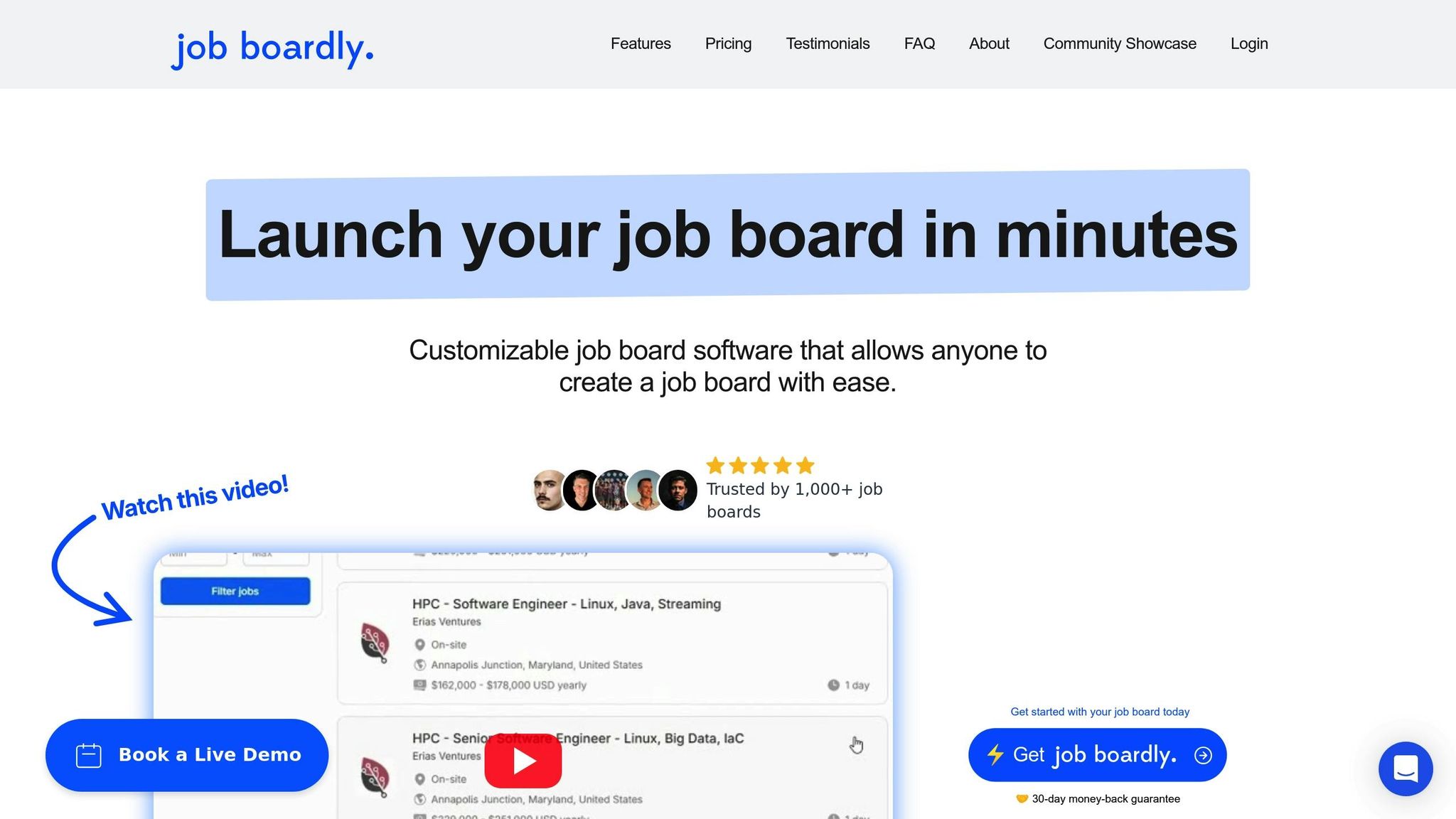
Job Boardly removes the technical headaches that used to make building a job aggregator overwhelming. Its standout features make the process seamless:
- Job Aggregator: This tool automatically pulls job listings from various sources, saving you the hassle of manual data collection.
- Job Backfiller: With access to 12M+ active listings via API, this feature ensures your board always has fresh content. It’s a game-changer for new platforms that don’t yet have direct partnerships with employers.
- Built-in SEO Tools: Job Boardly automatically optimizes your job listing pages with meta descriptions, title tags, and structured data, so your content is easily discoverable by search engines.
- Stripe Integration: Monetization is a breeze. Whether you want to charge for premium listings, offer subscriptions, or use a freemium model, the payment system is ready to go.
- Fully Hosted Platform: No need to worry about servers, uptime, or scaling as your traffic grows. Plus, its multi-language support makes it easy to reach global audiences.
Steps to Build with Job Boardly
With Job Boardly’s automation and user-friendly tools, setting up your aggregator is straightforward. Here’s how to get started:
1. Launch Your Aggregator
Start by creating an account and setting up the basics - name your board, define your niche, and choose your target location. For example, you might focus on tech jobs in the United States or healthcare roles in a specific region.
2. Set Data Sources and Filters
Use the Job Aggregator to define what types of job listings you want to pull. Customize filters by category, location, or keywords. For instance, if you’re building a tech-focused board, you can prioritize software development and IT roles from U.S.-based sources. The Job Backfiller will ensure a steady stream of listings, even before you establish direct partnerships with employers. You can also upload job feeds manually via CSV on Standard or XML on Pro for added flexibility.
3. Customize Your Design
Personalize your platform by adjusting the logo, colors, and typography. Use Job Boardly’s templates or add custom code for advanced tweaks. Connecting your own domain (e.g., jobs.yourbrand.com) boosts credibility, and the Pro plan removes Job Boardly’s branding for a fully white-labeled experience.
Enhance your site further by creating specialized landing pages. For example, if your aggregator covers tech jobs in New York and San Francisco, separate pages for each city can attract local traffic and provide a tailored experience. Adding sections like career advice or salary guides can also improve SEO and offer extra value to users.
4. Set Up Search and Filtering
Make it easy for job seekers to find relevant listings. Configure filters for keywords, location, job title, salary range, and more. Aim for a balance between detailed options and a clean, user-friendly interface.
5. Monetize Your Platform
Job Boardly’s Stripe integration simplifies payment processing, so you can focus on your pricing strategy. Options include charging for premium listings, offering subscription plans, or using a freemium model where basic postings are free, but upgrades cost extra.
6. Organize Job Listings
Create clear categories that align with your niche. For example, a healthcare aggregator might use sections like "Nursing", "Physicians", or "Healthcare Administration." This structure helps users navigate your site and improves search engine indexing.
7. Test Functionality
Before going live, thoroughly test your platform. Use various keywords and filters to ensure search results are accurate. Check that application links direct users to the correct sources and that the platform works smoothly on mobile devices. Submit test job postings as an employer to experience the workflow from their perspective.
8. Maintain Quality Control
Even with automation, regular audits are essential. Look out for duplicate or expired listings, and enable a feedback option so users can report issues. This ensures your platform remains reliable and trustworthy.
With Job Boardly, you can have your job board aggregator up and running in just a few days. At $50 per month (or $400 annually), you get the aggregation engine, SEO tooling, and monetization in one place — no integration work required. Aggregation and backfilling usage is billed separately through pay-as-you-go credits (1,000 credits for $12 ($0.012 each), 5,000 for $55 ($0.011 each), or 10,000 for $100 ($0.010 each)), valid for 12 months from purchase.
Conclusion
Let’s wrap up what we’ve explored so far.
Job board aggregators have transformed how people search for jobs and how employers find talent. Acting like search engines for job listings, these platforms gather postings from various sources into one place. This makes the process faster and ensures fewer opportunities slip through the cracks.
For employers and recruiters, aggregators offer a huge advantage. Instead of manually posting on multiple platforms, a single listing on an aggregator can reach thousands of job seekers. This broad exposure often leads to more applications and a better return on investment.
For entrepreneurs, the aggregator model is a goldmine of potential. These platforms can scale easily, handling millions of listings without a matching increase in costs. By starting with free aggregation to build traffic and later introducing premium services, it’s a proven way to grow profitability.
In the past, creating a job board aggregator required serious technical expertise, money, and months of development. But that’s no longer the case. Job Boardly has completely changed the game. With its no-code platform, tools like Job Aggregator for automatic data collection, and Job Backfiller, which connects you to 12M+ active listings, you can launch a fully functional aggregator in just days. Features like built-in SEO tools, Stripe integration for payments, and hosted infrastructure take the technical hassle out of the equation.
Testing and scaling an aggregator business has never been more achievable without an engineering team. Whether you’re targeting a niche like tech jobs in the U.S., healthcare roles in specific regions, or remote positions across industries, Job Boardly equips you with everything you need to build, personalize, and profit from your platform.
The job aggregator industry is also adapting to new trends, such as AI-powered matching, mobile-friendly designs, and Google Jobs integration - all of which come standard with Job Boardly.
To succeed, you’ll need to know your audience, ensure data accuracy with regular audits, and focus on a niche where you can truly stand out. By narrowing your focus and running a smooth operation, you can create a reliable bridge between job seekers and employers.
FAQs
How do job board aggregators maintain accurate and high-quality job listings from multiple sources?
Job board aggregators use sophisticated tools and automated systems to collect job listings from a wide range of sources, such as career websites, company pages, and more. These systems are designed to eliminate duplicates, outdated postings, and irrelevant entries, ensuring users see accurate and current job opportunities.
Many of these platforms also rely on algorithms to sort and categorize job postings, making it easier for users to find relevant listings. Some even incorporate manual reviews or user feedback to fine-tune the results and enhance the overall experience.
What legal issues can job board aggregators face when gathering and sharing job listings?
Job board aggregators often face legal hurdles tied to data privacy, copyright laws, and terms of service violations. To stay compliant, they need to follow regulations like the GDPR or CCPA, depending on their operational region, and ensure they don't collect personal data without obtaining proper consent.
On top of that, respecting the intellectual property rights of the original job postings is critical. This means avoiding the unauthorized use of content and strictly adhering to the terms and conditions set by the websites they pull listings from. Ignoring these rules could result in legal conflicts or financial penalties.
How can entrepreneurs use no-code tools like Job Boardly to build a successful job board aggregator?
Entrepreneurs can use no-code platforms like Job Boardly to build and manage job board aggregators without needing advanced technical expertise. These platforms streamline the process with features such as job aggregation, customizable designs, and SEO optimization, making it simple to create a platform tailored to specific niches.
Job Boardly also offers monetization options, including paywalls and Stripe integration, allowing users to generate revenue directly through their platforms. This means entrepreneurs can spend less time on technical hurdles and more time growing their audience while delivering value to both job seekers and employers.