Top International Job Boards for Hiring in 2025

Looking to hire talent in 2025? Here’s the lowdown: global job boards are leading the way in recruitment. Platforms like Indeed, LinkedIn Jobs, and Glassdoor dominate, offering employers access to millions of candidates worldwide. Whether you’re hiring for professional roles, tech talent, or remote workers, there’s a job board tailored to your needs.
Here’s a quick breakdown of the top platforms:
- Indeed: Largest job board with 300M monthly visitors and 130M listings. Pay-per-click model for employers.
- LinkedIn Jobs: Ideal for professional roles, with 900M users and networking features.
- Glassdoor: Combines job listings with salary and company reviews for transparency.
- ZipRecruiter: AI-powered matching and distribution to 100+ partner boards.
- Wellfound (AngelList Talent): Focused on startups, with salary/equity transparency.
- FlexJobs: Verified remote jobs, subscription-based for seekers.
- We Work Remotely: Largest remote-only job board, $299 per post for employers.
- Seek: Australia’s leading job board, strong in the Asia-Pacific region.
- Totaljobs: UK-focused, great for local hiring.
- Stack Overflow Jobs: Specialized for hiring developers and tech professionals.
Quick Comparison
| Platform | Focus Area | Monthly Traffic | Pricing (Employers) | Strengths |
|---|---|---|---|---|
| Indeed | General hiring | 300M | Pay-per-click | Massive reach, all industries |
| LinkedIn Jobs | Professional roles | 900M | Freemium | Networking + job search integration |
| Glassdoor | Transparency-focused | 60M | Paid postings | Salary and company reviews |
| ZipRecruiter | AI-driven distribution | 21M | Paid postings | Broad reach via partner boards |
| Wellfound | Startups | N/A | Paid postings | Salary/equity details, startup focus |
| FlexJobs | Remote jobs | 135M | Subscription | Verified remote jobs |
| We Work Remotely | Remote-only roles | N/A | $299 per post | Largest remote job board |
| Seek | Australia/New Zealand | N/A | Varies | Regional expertise |
| Totaljobs | UK/EU-focused | N/A | Varies | Local market knowledge |
| Stack Overflow | Tech professionals | 14M | Paid postings | Developer-specific hiring |
Key takeaway: Use a mix of general and niche platforms to maximize reach and candidate quality. For global hiring, start with Indeed and LinkedIn Jobs, then add niche boards like Stack Overflow or FlexJobs for specialized roles.
1. LinkedIn Jobs

LinkedIn Jobs stands out as a platform that seamlessly combines job searching with career development. With a global user base exceeding 900 million and more than 20 million active job listings focused on quality over quantity, it has become a key resource for white-collar professionals, tech specialists, and those aiming for roles in well-established organizations.
What sets LinkedIn apart is its unique blend of features. Beyond simply listing jobs, it allows users to build their professional brands, gain in-depth insights into companies, and connect directly with recruiters. This networking-driven approach enhances referral-based hiring, giving candidates access to opportunities through trusted connections.
The platform is particularly popular among Fortune 500 companies and professional services, catering to mid-level managers and executives alike. Its emphasis on verified work histories and strong credentials creates a reliable environment for both job seekers and employers. These strengths provide a foundation for exploring its pricing, job volume, traffic, and functionality in greater detail.
Pricing
LinkedIn Jobs operates on a freemium model, keeping access free for job seekers while offering paid options for employers. Job seekers can browse and apply for roles at no cost, but employers can choose from sponsored job postings, recruiter subscriptions, and premium packages tailored to their needs. Additionally, job seekers can opt for LinkedIn Premium, which provides added benefits like InMail messaging and advanced search tools.
Job Listings Volume
With over 20 million active job listings at any given time, LinkedIn Jobs offers a wealth of professional opportunities. The platform focuses on specialized roles in fields like technology, management, finance, and marketing, rather than concentrating on hourly or entry-level positions.
Traffic and Reach
LinkedIn’s global presence is hard to match. It attracts 300 million monthly visitors and operates in over 200 countries, supporting multiple languages. This extensive reach makes it an excellent choice for multinational corporations building distributed teams and businesses targeting experienced, career-oriented professionals.
Functionality and Features
One of LinkedIn Jobs’ greatest strengths is its integration of job searching with professional networking. Before applying for a role, users can explore company profiles, read testimonials, and identify shared connections. Advanced AI algorithms enhance the experience by matching candidates with roles based on their skills, experience, and career goals, making the job search process more efficient.
Additional standout features include direct messaging with recruiters, compatibility with applicant tracking systems, and tools that allow employers to showcase their brand through detailed company pages and testimonials. Salary transparency and skills-based matching also help align expectations between candidates and employers, reflecting current market trends. This integrated approach solidifies LinkedIn’s position as a leader in global recruitment, meeting the evolving needs of both job seekers and employers.
2. Indeed

Indeed stands as the largest job board globally, boasting over 130 million job listings and attracting 300 million unique visitors every month. For job seekers across virtually every industry and experience level, Indeed has become the go-to platform.
One of its key strengths lies in its broad reach. Indeed caters to job seekers at all career stages, excelling particularly in fields like healthcare, administration, and roles ideal for professionals looking to switch industries. This versatility ensures employers can access a wide and varied talent pool, spanning multiple sectors and skill levels. When used alongside networking and employee referral efforts, Indeed's extensive reach can significantly boost hiring success. Let’s explore its pricing, job volume, reach, and features in more detail.
Pricing
Employers enjoy a flexible pay-per-click (PPC) model, while job seekers use the platform for free. With the PPC model, businesses only pay when someone clicks on their job listing, eliminating the need for upfront flat fees. This flexibility makes Indeed accessible to organizations of all sizes, from startups working with tight budgets to large corporations.
Job Listings Volume
Indeed hosts a staggering 130 million active job listings. This massive inventory ensures that employers can find candidates in virtually any industry or experience level, while job seekers have access to a broad range of opportunities.
Traffic and Reach
With 300 million unique visitors every month, Indeed offers unparalleled exposure for job postings. Its global presence enables both employers and job seekers to connect across borders, making international recruitment more straightforward. The platform’s network effect - where a growing number of job seekers draws in more employers, and vice versa - further amplifies its effectiveness.
Functionality and Features
Indeed equips both job seekers and employers with advanced tools to streamline the hiring process. Job seekers can narrow their searches based on job title, keywords, location, posting date, and experience level, making it easier to find tailored opportunities. Employers benefit from targeted posting options and smart algorithms that match listings to qualified candidates based on their profiles and search behavior. Including detailed job descriptions, salary ranges, and insights into company culture can further improve the chances of attracting top-tier talent.
With its vast scale, high traffic, and ability to cater to a wide array of industries and experience levels, Indeed remains a dominant force in the job board market. Its reputation, combined with continuous updates and improvements, ensures it remains a cornerstone of modern hiring strategies.
3. Glassdoor
Glassdoor has grown from a simple review site into a powerful job board that combines job listings with insights into salaries and workplace culture. It stands out in the hiring world by giving candidates the tools to research potential employers while exploring job opportunities.
What makes Glassdoor unique is its dual purpose: job seekers can browse listings while also accessing employee reviews, salary details, and interview tips. This approach appeals to candidates who prioritize transparency in company culture and compensation. Its business model and range of features further solidify its position in the market.
Pricing
Employers pay to post jobs on Glassdoor, but the platform doesn’t stop there. Job postings are bundled with employer branding tools that showcase company culture and values - an added edge in competitive talent markets.
Traffic and Reach
With 60 million monthly users, Glassdoor attracts an audience that goes beyond simply browsing job openings. These users actively research companies and roles, making them highly engaged. Unlike traditional job boards, Glassdoor appeals to candidates who want to understand a potential employer before applying.
The platform also has a global reach, with a strong foothold in the United States and other English-speaking regions. Its international presence makes it accessible to job seekers and employers across multiple markets.
Functionality and Features
Glassdoor's standout feature is its salary transparency tools. Job seekers can view salary ranges for specific roles and locations, giving them a clear picture of market rates before applying. Beyond salaries, the platform’s company review system offers verified insights from employees about workplace culture, management styles, and work-life balance - details you won’t find in a typical job description.
For those prepping for interviews, Glassdoor provides resources like common interview questions and tips shared by past candidates. Its job matching algorithms also recommend roles based on user profiles and search history, helping job seekers discover opportunities they might have overlooked. Additionally, detailed company profiles allow candidates to quickly assess whether an employer aligns with their values and career goals.
Glassdoor excels in attracting candidates for mid-to-senior corporate roles where company culture and branding heavily influence decisions. However, for highly specialized or hourly positions, niche job boards might be a better fit. Still, Glassdoor remains a go-to for those who value transparency and workplace insights.
4. ZipRecruiter
ZipRecruiter has carved out a unique space in the job board market by blending AI-driven job matching with an impressive distribution network. When employers post a job on ZipRecruiter, it doesn’t just stay on their site - it’s shared across a network of over 100 partner job boards. This approach significantly broadens the reach of job postings, making it a go-to platform for companies aiming to attract a large pool of candidates without juggling multiple job board accounts.
By acting as both a standalone job board and an aggregator, ZipRecruiter offers a streamlined experience for employers and job seekers alike. Employers benefit from simplified posting and distribution, while job seekers gain access to a wide array of opportunities, all in one place.
Traffic and Reach
ZipRecruiter pulls in 21 million monthly users. While this figure doesn’t match Indeed’s massive 300 million monthly visitors, it’s still a highly engaged audience that employers can tap into effectively.
The platform’s standout feature is its extensive distribution network. A single job posting on ZipRecruiter is automatically shared with over 100 partner boards. This means your listing isn’t limited to one platform - it reaches candidates on niche industry sites, regional job boards, and beyond. For businesses without a dedicated recruiting team or those needing to maximize visibility quickly, this network effect is a huge time-saver and simplifies the hiring process.
Functionality and Features
ZipRecruiter’s strength isn’t just in its reach - it’s also in its tools. The platform uses advanced algorithms to match job seekers with roles that suit their skills and experience. For employers, this means qualified candidates are surfaced quickly, helping to streamline the hiring process.
Another key feature is the automated distribution system. Once a job is posted, ZipRecruiter formats and distributes it across its network, ensuring it appears on platforms where candidates are actively searching. Whether it’s a general job board, a specialized industry site, or a regional platform, your posting is positioned to attract the right talent.
As a generalist platform, ZipRecruiter works well across industries and job levels. It’s particularly effective for sectors like healthcare and administration, where candidates often explore opportunities in multiple fields. Mid-sized companies and larger enterprises benefit from its ability to handle multiple job postings efficiently, while smaller businesses gain increased exposure without additional effort.
While it doesn’t offer the in-depth company culture insights of Glassdoor or the networking advantages of LinkedIn, ZipRecruiter excels in speed and reach. Its combination of AI matching and automated distribution makes it a practical option for employers who need to fill roles quickly and want access to a diverse pool of candidates across multiple platforms.
5. Wellfound (formerly AngelList Talent)
Wellfound is a platform tailored for connecting venture-backed startups and early-stage businesses with professionals eager to work in dynamic, entrepreneurial settings. Unlike broader job boards that cater to a wide range of industries, Wellfound zeroes in on the unique needs of the startup ecosystem, making it an ideal space for both employers and job seekers in this niche.
This focused approach benefits both sides. Startups gain access to motivated candidates who thrive in fast-paced, high-growth environments, while job seekers can explore opportunities that align with their passion for innovation and willingness to embrace the challenges of early-stage companies. Below, we’ll break down Wellfound's job listings, audience reach, and standout features.
Job Listings Volume
Wellfound boasts a robust selection of over 100,000 startup job postings worldwide, many of which include remote work options. Its emphasis on startup-centric roles makes it a popular destination for those targeting positions in venture-backed or early-stage companies. The platform covers a variety of roles, with a strong presence in engineering, product management, design, and business development.
Traffic and Reach
The platform's audience is deeply rooted in the startup and entrepreneurial community. This focus ensures that both employers and candidates share a common interest in growth, innovation, and adaptability. By connecting with this niche audience, Wellfound fosters better alignment between startups and potential hires.
Functionality and Features
One of Wellfound's standout features is its emphasis on transparency and direct communication. Most job postings include salary ranges and equity details, giving candidates a clear picture of their potential compensation upfront - an essential factor when evaluating opportunities that include equity stakes. Additionally, the platform enables applicants to connect directly with founders or key team members, creating a more personal hiring process.
Wellfound also offers advanced filtering tools to simplify job searches. Candidates can narrow down opportunities based on preferences like fully remote roles, detailed company culture insights, and comprehensive compensation packages. These features make the platform particularly appealing to tech professionals and those looking for roles within venture-backed startups or early-stage companies.
6. FlexJobs
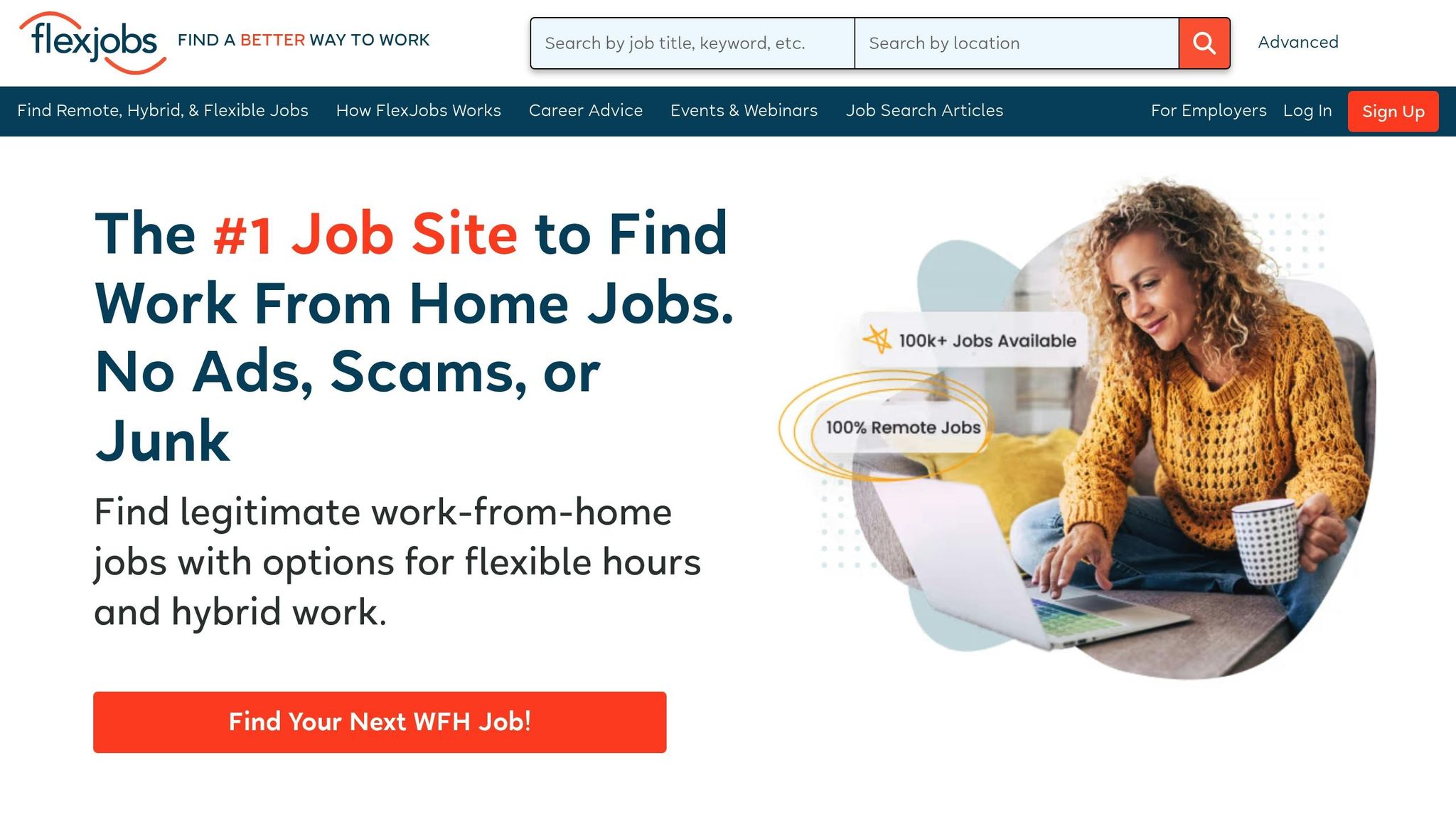
FlexJobs stands out as a trusted platform dedicated to remote and flexible work opportunities. Since its inception in 2007, it has connected an impressive 135 million users with thoroughly vetted job listings. What sets FlexJobs apart is its rigorous review process - spending 200 hours daily to ensure each listing meets high standards of legitimacy and quality. This commitment has solidified its reputation within the global recruitment landscape.
Pricing
Unlike free job boards like Indeed or LinkedIn Jobs, FlexJobs operates on a subscription model. Trial subscriptions start at just $2.95. For job seekers who value their time and want to avoid scams, this model offers peace of mind by eliminating the need to sift through unverified listings.
Job Listings Volume
As of 2025, FlexJobs features a robust collection of 145,963 remote job postings from 8,580 verified companies. The platform specializes in industries that naturally align with remote work, such as technology, marketing, writing, customer service, and administrative roles. It’s particularly beneficial for those new to remote work or seeking flexible arrangements, including part-time or freelance positions.
Traffic and Reach
FlexJobs caters to a global audience, making it an excellent choice for those pursuing international remote jobs. The subscription model also ensures a dedicated pool of candidates who are serious about finding remote work opportunities.
Functionality and Features
FlexJobs offers more than just job listings - it includes career coaching and resume assistance as part of its subscription. Its meticulous vetting process guarantees job seekers access to legitimate opportunities from reputable companies, steering clear of scams or questionable postings. Advanced filtering options allow users to easily search for fully remote, part-time, or freelance roles, aligning with current trends in the job market. For employers, FlexJobs provides access to a pre-screened talent pool of candidates already motivated and prepared for remote work, which can significantly reduce hiring time and simplify recruitment efforts.
sbb-itb-316a34c
7. We Work Remotely
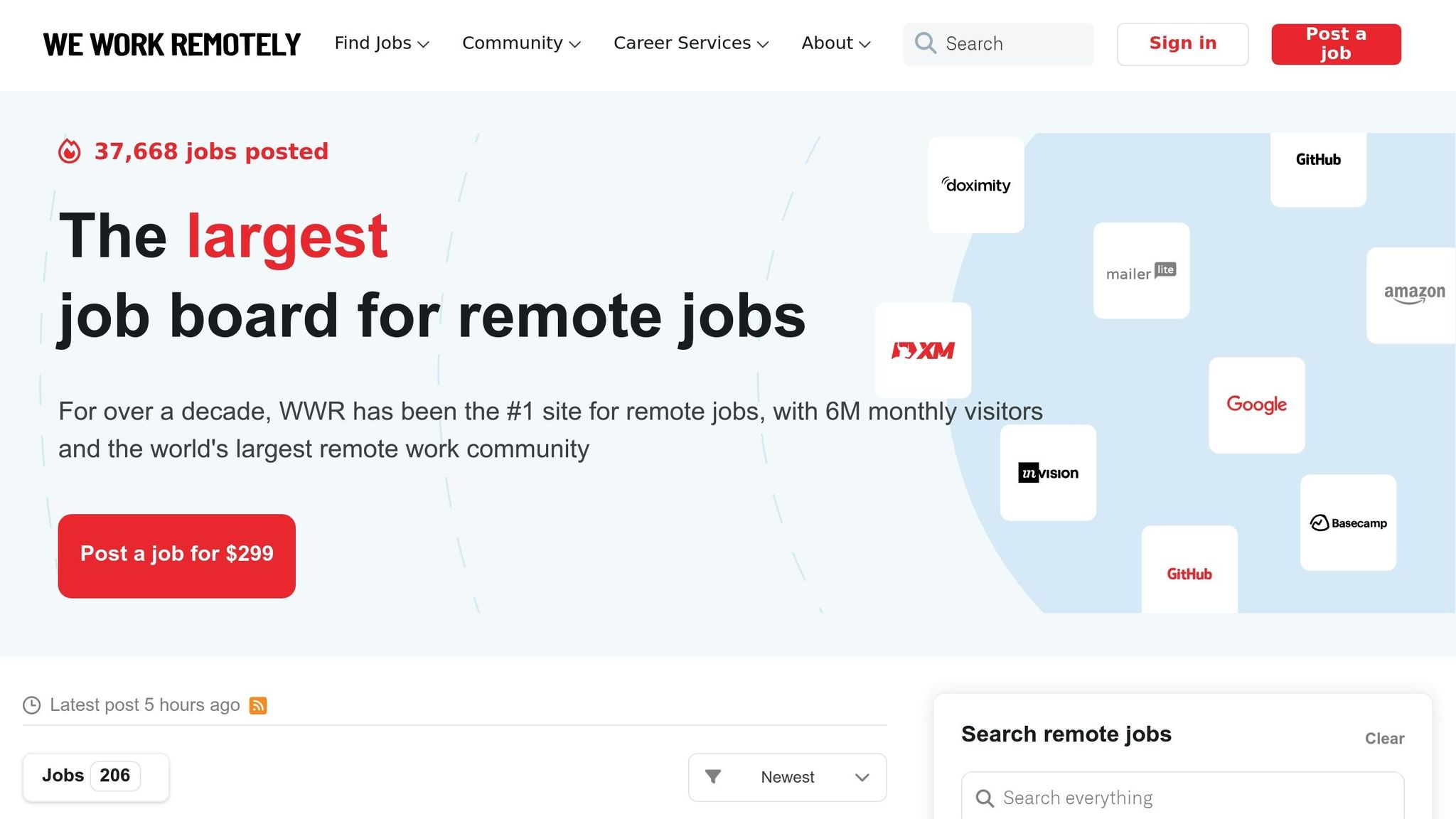
We Work Remotely stands out as the largest job board dedicated entirely to remote work opportunities. While many platforms blend in-person roles with remote options, this site is laser-focused on fully remote positions. For employers seeking remote talent and job seekers prioritizing flexibility, this specialization creates a streamlined and efficient experience, free from the clutter of more generalized platforms.
Pricing
We Work Remotely operates on an employer-pay model, charging companies $299 for each job listing. Job seekers, on the other hand, can browse listings at no cost. This simple structure ensures businesses can connect with a motivated pool of remote-focused candidates while keeping access free for those exploring opportunities.
Job Listings Volume
Each month, the platform showcases over 1,000 new job postings spanning industries like tech, design, and other remote-friendly fields. By narrowing its focus to remote roles, the board ensures that every listing is relevant to professionals seeking location-independent careers.
Traffic and Reach
As the world's largest remote-only job board, We Work Remotely attracts a massive audience of professionals committed to remote work. Employers range from startups to established companies that embrace remote-first or flexible hiring approaches. This focus on geographic freedom draws job seekers who are eager to apply for roles tailored to their lifestyle.
Functionality and Features
The platform’s straightforward employer-fee model complements its broad reach. This design makes it easy for companies to connect with candidates who are specifically looking for remote opportunities, ensuring a more targeted and effective hiring process.
8. Seek
Seek stands out as Australia's largest job board, dominating the employment market across the country. While global platforms like Indeed and LinkedIn Jobs offer extensive international reach, Seek has carved its niche by focusing on regional expertise in Australia and New Zealand. This makes it a go-to choice for companies targeting talent in the Asia-Pacific region. Whether you’re looking for candidates familiar with local work practices or expanding your business into this area, Seek provides a tailored approach that fits regional hiring needs.
Pricing
For pricing details, employers should visit Seek's official pricing page. The platform offers different models, which may include pay-per-post, subscription plans, or tiered options. Specific costs depend on the type of listing and services chosen.
Job Listings Volume
Although exact figures aren’t disclosed, Seek hosts a strong number of active job postings. Its strength lies in its targeted focus on the Australia and New Zealand markets, rather than competing with the massive volumes seen on global job boards.
Traffic and Reach
Seek’s dominance in the region ensures it attracts job seekers focused on opportunities within Australia and New Zealand. Businesses ranging from local startups to multinational corporations expanding into the Asia-Pacific region trust Seek to connect them with highly relevant candidates in these areas.
Functionality and Features
Seek is designed with local hiring practices in mind. It offers tools and features aligned with regional salary standards, industry norms, and employment expectations. For companies with international hiring strategies, Seek acts as a critical piece of the puzzle, complementing global platforms to ensure a well-rounded approach to recruitment.
9. Totaljobs
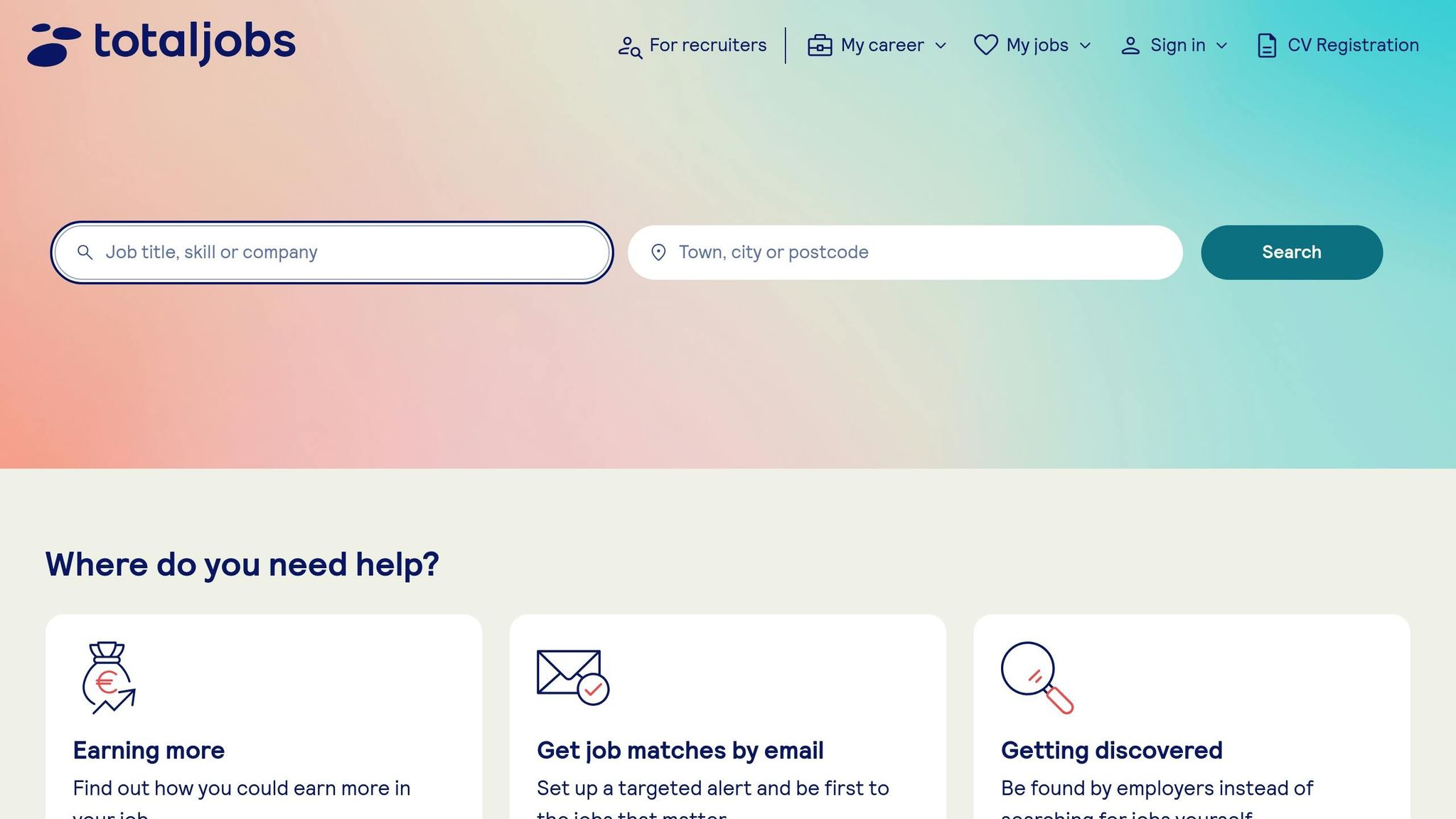
Totaljobs serves as a key connection point between employers and candidates across the UK and Europe, offering insights into local markets and employment practices.
Pricing
Employers using Totaljobs can choose between a subscription model or a pay-per-posting option. Pricing depends on factors like how long the job is listed, the visibility features selected, and the type of employer package chosen. For the most up-to-date pricing details, it's best to contact Totaljobs directly.
Job Listings Volume
Totaljobs focuses on providing curated job listings specific to the UK, minimizing irrelevant applications and helping employers find more suitable candidates.
Traffic and Reach
With its focus on UK audiences, Totaljobs attracts job seekers who are actively looking for local opportunities. This regional emphasis often leads to higher conversion rates for companies hiring within the UK or nearby regions. To support this, Totaljobs offers features designed to meet the specific needs of local employers.
Functionality and Features
As a well-established UK job board, Totaljobs offers all the standard tools you'd expect: job search filters, employer profiles, candidate application tracking, and job alerts. It also provides access to a resume database, advanced search tools, and options for employer branding tailored to the UK market. Features like job categories, salary benchmarks aligned with British norms, and compliance with UK regulations make it particularly effective for hiring in areas like finance, healthcare, administration, and management. However, for more niche hiring needs - such as startup roles, remote jobs, or highly technical positions - employers might want to pair Totaljobs with specialized industry job boards for better results.
10. Stack Overflow Jobs
Stack Overflow Jobs takes a specialized route to connect employers with top technical talent, offering a platform tailored specifically for developers and other tech professionals.
This job board is part of the larger Stack Overflow ecosystem, which attracts over 14 million visitors every month. What sets it apart is its ability to let employers assess candidates not just through traditional resumes but also through their contributions to the Stack Overflow community - showcasing their coding expertise and problem-solving abilities.
Pricing
For employers, Stack Overflow Jobs operates on either a pay-per-posting basis or through subscription plans, depending on the level of exposure and features required. Job seekers, on the other hand, can browse listings at no cost. To get the most up-to-date pricing options, it’s best to reach out directly to Stack Overflow.
Job Listings Volume
The platform consistently features a diverse range of job opportunities tailored to developers. These include roles like software developers, full-stack engineers, backend and frontend developers, as well as DevOps engineers. The exact number of active listings fluctuates with market demand, but the focus remains squarely on tech-driven positions.
Traffic and Reach
With its massive global audience of over 14 million monthly visitors, Stack Overflow Jobs attracts professionals from regions like North America, Europe, and Asia. This makes it an excellent choice for companies looking to hire remote workers or those willing to relocate for the right opportunity.
Functionality and Features
Stack Overflow Jobs is packed with features designed specifically for technical hiring. Employers can filter candidates by programming languages, frameworks, and technologies, while also viewing their reputation scores and contributions within the Stack Overflow community. Additional filters for experience level, location, and remote work preferences, paired with job matching algorithms, make it easier to find the right fit. While this platform excels in tech hiring - ideal for industries like SaaS, fintech, and e-commerce - its narrow focus on technical roles means it’s not the best option for non-technical positions.
Comparison of Strengths and Weaknesses
This section provides a side-by-side comparison of the strengths and weaknesses of various job platforms, focusing on factors like reach, candidate quality, functionality, and geographic focus.
Indeed stands out with its massive scale - 130 million job listings and 300 million monthly visitors. This makes it a go-to platform for reaching the largest audience. However, its sheer volume often requires additional filtering to weed out less relevant applications.
LinkedIn Jobs is a top choice for professional and white-collar hiring, leveraging its 900-million-strong user base and over 20 million active job postings. Its integration of professional profiles, referral networks, and company research tools makes it a powerful resource for recruiting experienced professionals. That said, it’s less effective for hourly or service industry roles.
Glassdoor combines job listings with employee reviews and salary data, drawing in 60 million monthly users. This transparency enables candidates to make more informed decisions, but companies with negative reviews may struggle to attract applicants.
ZipRecruiter uses AI-powered matching to distribute job postings across 100+ partner boards, reaching 21 million monthly users. While its tech-driven approach simplifies hiring, its AI matching system may not work equally well for all industries.
Wellfound (formerly AngelList Talent) caters specifically to startups, offering over 100,000 job postings worldwide. Its AI-driven matching emphasizes cultural alignment and reportedly achieves 60% better candidate-job fit scores. Features like direct founder access and salary/equity transparency speed up hiring, but its focus on startups limits its appeal for enterprise-level recruitment.
FlexJobs has been connecting job seekers to verified remote opportunities since 2007, with 135 million users and a curated approach that prioritizes quality. However, its subscription fees for job seekers (starting at $2.95 for a trial) can reduce the overall applicant pool.
We Work Remotely is the largest remote-only job board, adding over 1,000 new listings monthly. Employers pay $299 per post, and the platform attracts a pool of self-selected remote workers. However, its exclusive focus on remote roles makes it unsuitable for on-site hiring.
Seek and Totaljobs dominate their respective regional markets - Australia and the U.K. - offering deep local expertise and region-specific job categories. While they excel locally, their geographic focus makes them less effective for international hiring.
Stack Overflow Jobs specializes in developer talent, serving 14 million monthly visitors with a community-vetted approach. It’s a strong choice for recruiting tech professionals in areas like SaaS, fintech, and e-commerce, but it’s not suitable for non-technical roles.
Here’s a quick summary in table form:
| Platform | Monthly Traffic | Job Listings Volume | Pricing Model | Primary Strength | Key Weakness |
|---|---|---|---|---|---|
| Indeed | 300 million visitors | 130 million listings | Free for job seekers | Massive reach and volume | Requires heavy filtering |
| LinkedIn Jobs | 900 million users | 20 million+ active roles | Free for job seekers | Professional networking integration | Limited for hourly/service roles |
| Glassdoor | 60 million users | Not specified | Free for job seekers | Transparency with reviews and salaries | Negative reviews may deter applicants |
| ZipRecruiter | 21 million users | Distributes to 100+ boards | Free for job seekers | AI-driven matching and distribution | Industry-specific limitations |
| Wellfound | Not specified | 100,000+ startup postings | Free for job seekers | Strong fit for startups | Limited enterprise opportunities |
| FlexJobs | 135 million users | 145,963 remote positions | $2.95+ subscription for seekers | Verified, hand-curated remote jobs | Subscription reduces applicant volume |
| We Work Remotely | Not specified | 1,000+ new monthly listings | Free for seekers; $299 for employers | Largest remote-only job board | Excludes on-site hiring |
| Seek | Not specified | Not specified | Not specified | Australian market leader | Limited outside Australia |
| Totaljobs | Not specified | Not specified | Not specified | U.K. market leader | Limited outside the U.K. |
| Stack Overflow Jobs | 14 million visitors | Developer-focused volume | Pay-per-post or subscription | Ideal for technical roles | Not suited for non-technical hiring |
Employer Costs and Functionality
Employer costs vary widely. Some platforms, like Indeed and LinkedIn, operate on freemium models with optional premium features, while others, like We Work Remotely, charge flat fees ($299 per post). Specialized platforms such as Wellfound and Stack Overflow focus on delivering high-quality candidates through targeted matching and community vetting, while platforms like Indeed prioritize volume and rely on employers to filter candidates.
Functionality also differs significantly. Indeed offers tools like keyword search, location filters, and experience-level sorting. LinkedIn integrates professional networking features, while Glassdoor provides valuable insights through company reviews and salary data. ZipRecruiter’s AI streamlines job posting distribution, and Wellfound emphasizes transparency with salary and equity details.
Geographic Reach
Geographic focus is another critical factor. Platforms like Indeed, LinkedIn, and ZipRecruiter operate globally, while Wellfound targets startups worldwide. FlexJobs and We Work Remotely cater specifically to remote roles. In contrast, Seek and Totaljobs excel in their respective regional markets but are less effective for international hiring.
Conclusion
When deciding on job boards, tailor your choices to align with your hiring objectives, budget, and the type of talent you’re seeking.
For a broad reach and general hiring needs, Indeed and LinkedIn Jobs are solid options. Indeed spans all industries and job levels, though its higher application volume may demand extra filtering. LinkedIn Jobs, on the other hand, excels in connecting employers with professional and white-collar candidates.
For technical, startup, or remote roles, sector-specific platforms are often the better choice. Stack Overflow Jobs provides a direct line to technical professionals. Wellfound (formerly AngelList Talent) is particularly effective for startups, offering transparency around equity and founder access to speed up hiring decisions. Employers looking for remote talent should consider We Work Remotely, which offers a focused pool of candidates, though its $299 posting fee might require budget planning.
A key takeaway here is the importance of a multi-platform strategy. While Indeed and LinkedIn offer global reach, regional job boards often yield stronger local candidate pools. If you're hiring internationally, combining global platforms with regional leaders can give you the best results.
When it comes to budget allocation, aim for a mix of generalist boards and niche platforms. General job boards like Indeed attract a high volume of applications - often 20–100+ per posting - but require more time for screening. In contrast, specialized platforms like FlexJobs, which has matched 135 million users with nearly 146,000 verified remote roles, generally deliver fewer applications (2–10) but with better skill alignment and cultural fit.
Platform functionality also plays a role in streamlining your hiring process. ZipRecruiter simplifies job distribution by automatically sharing postings across 100+ partner boards. LinkedIn’s advanced filters make it easier to zero in on the right candidates. Meanwhile, Glassdoor, with its 60+ million monthly users, integrates company reviews and salary data, encouraging candidates to self-select based on cultural alignment - saving you time on mismatched applications.
Ultimately, the most effective hiring strategies involve leveraging multiple platforms rather than depending on just one. Start with a generalist platform for wide exposure, add industry-specific boards for targeted outreach, and include regional platforms when geographic focus is needed. This multi-board approach can boost the volume of qualified applicants by 40–60% compared to single-platform strategies. Use analytics to monitor performance and fine-tune your approach, ensuring you get the best mix of cost efficiency and candidate quality.
FAQs
How can I find the best job board for my company's hiring needs in 2025?
To pinpoint the best job board for your hiring needs in 2025, begin by focusing on platforms tailored to your industry or the specific positions you’re aiming to fill. Look for features like job aggregation, SEO tools, and customization options that allow you to align postings with your brand's identity.
For international hiring, it’s crucial to choose platforms that support multiple languages and offer tools designed to simplify global recruitment. Assess the platform’s functionality, user experience, and scalability to ensure it can grow alongside your business and meet your evolving needs.
What are the advantages of using niche job boards over general job boards for hiring?
Niche job boards are designed to connect employers with professionals in a specific field or industry, streamlining the process of finding candidates with the right expertise. This focused approach helps employers zero in on qualified talent more efficiently than broad, general job boards.
By concentrating on a particular industry or skill set, these platforms reduce the time spent sifting through irrelevant applications. For both recruiters and job seekers, this means a more precise match between job postings and qualifications, leading to quicker and more effective hiring outcomes.
What’s the best way to use multiple job boards for global recruitment?
Using several job boards can greatly enhance your global hiring strategy by connecting you with a wide range of candidates and focusing on specific industries or regions. Platforms that offer multi-language support and customizable tools make it easier to adapt your job postings, ensuring they resonate with talent from different parts of the world.
Choose job boards that match your recruitment goals - whether you’re targeting niche industries or looking for platforms with high international visibility. This approach helps you expand your reach while staying relevant to the audience you want to attract.