A job board is an online platform where employers post open positions and job seekers browse and apply for roles. Job boards act as a marketplace connecting both sides of the hiring process — giving employers access to a pool of candidates and giving job seekers a centralised place to find opportunities.
Job boards range from massive general platforms like Indeed and LinkedIn to small, specialized sites focused on a single industry, skill set, or region. Whether you’re looking for your next role or thinking about building a job board yourself, this guide covers everything you need to know.
Job board meaning, in plain terms: A job board is an online platform — also called a job site or careers portal — where employers advertise vacancies and job seekers search and apply for them. Because nearly all of them are web-based today, “job board” and “online job board” mean the same thing.
If you are here because you want to run one, Job Boardly is the hosted job board software this site is about, and the build guide walks through a launch step by step.
How Do Job Boards Work?
Job boards serve two audiences at once: employers looking to hire and candidates looking for work.
For employers, the process is straightforward. They create an account, write a job listing with details like title, description, location, salary, and requirements, and publish it. Depending on the platform, posting may be free or paid. Once live, the listing appears in search results and candidates can apply directly — usually by submitting a resume and cover letter through the platform.
For job seekers, job boards function as a search engine for open roles. You can filter by keyword, location, industry, salary range, job type (full-time, part-time, contract), and more. Most boards let you create a profile, upload your resume, and set up email alerts so you’re notified when relevant jobs are posted.
Some job boards also allow employers to search candidate profiles directly, flipping the model — instead of candidates applying, recruiters reach out to them.
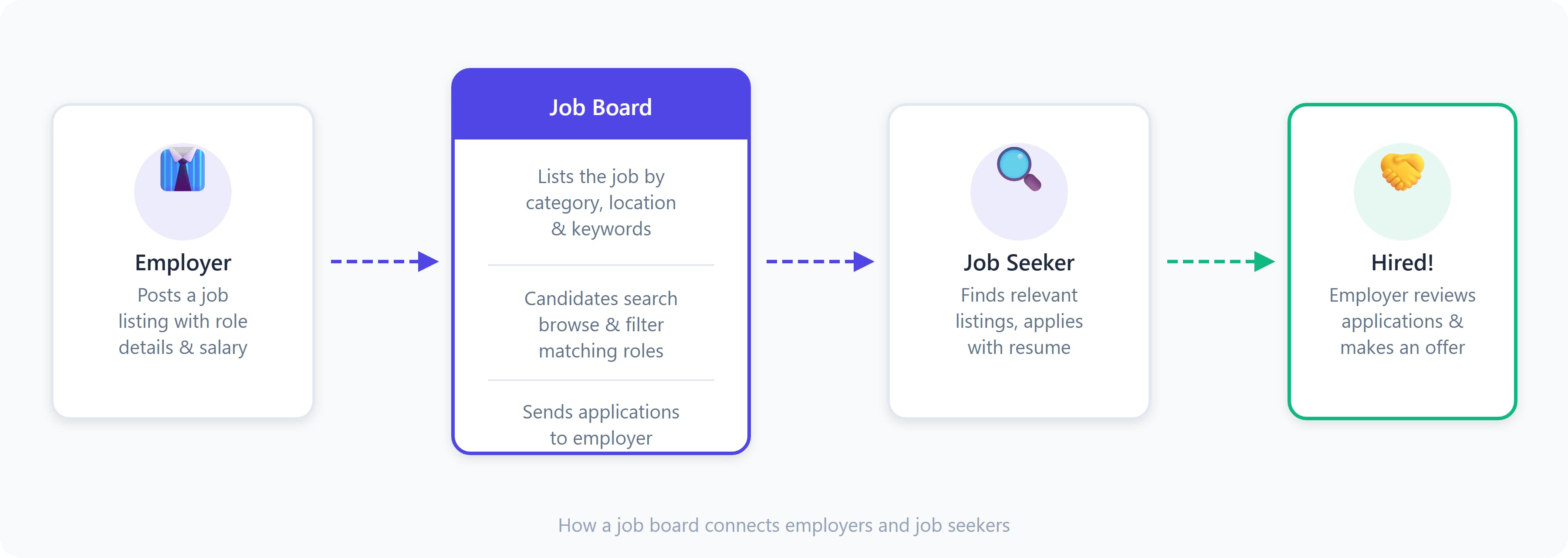
The Basic Flow
- An employer posts a job listing with all the relevant details
- The listing appears on the job board, indexed by category, location, and keywords
- Job seekers search or browse listings that match their criteria
- Candidates apply through the platform, usually with a resume and cover letter
- The employer reviews applications and contacts shortlisted candidates
Most modern job boards also integrate with applicant tracking systems (ATS), making it easier for employers to manage the hiring pipeline without leaving the platform. Separately, many employers use job posting software to distribute a single listing across multiple job boards at once.
Types of Job Boards
Not all job boards are the same. They vary by scope, audience, and business model. Here are the main types:
General Job Boards
These are the large, broad platforms that cover every industry and job type. They attract the highest volume of traffic but also the most competition for both employers and job seekers.
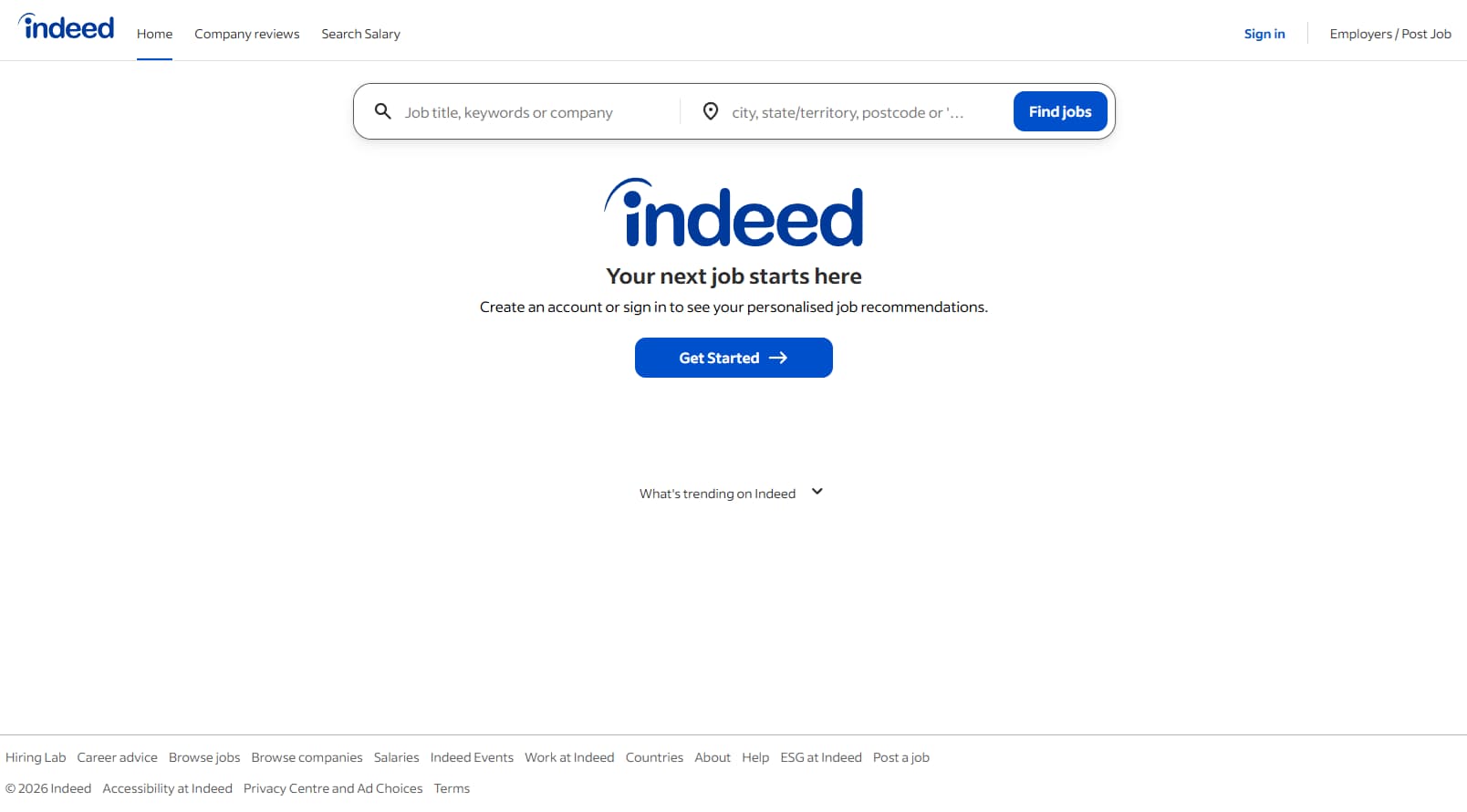
Examples: Indeed, LinkedIn Jobs, Glassdoor, ZipRecruiter
General boards work well for high-volume hiring and widely applicable roles, but employers in specialized fields often find them too noisy.
Niche Job Boards
Niche job boards focus on a specific industry, profession, skill set, or demographic. Because they serve a targeted audience, they tend to deliver higher-quality matches for both sides.
Examples:
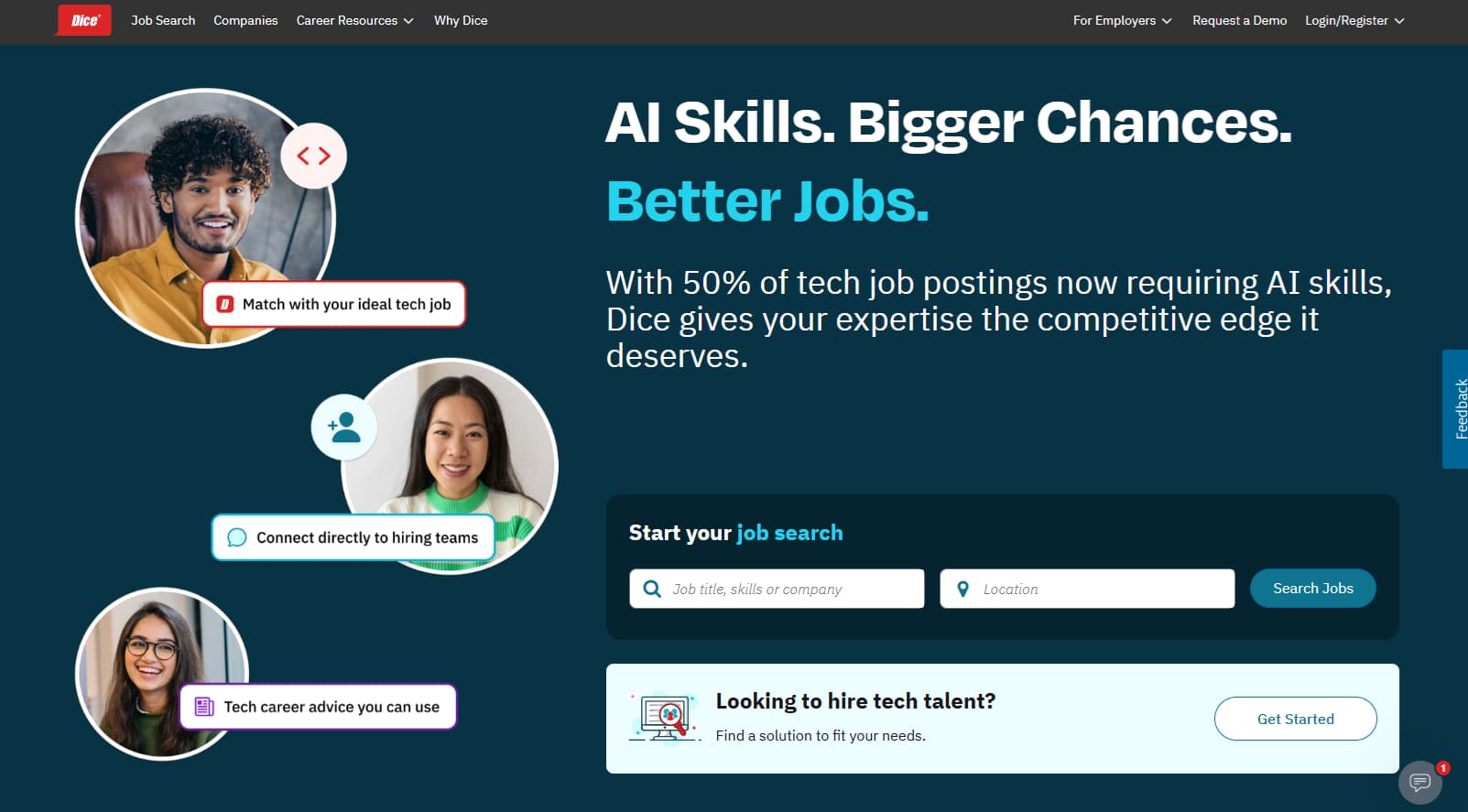
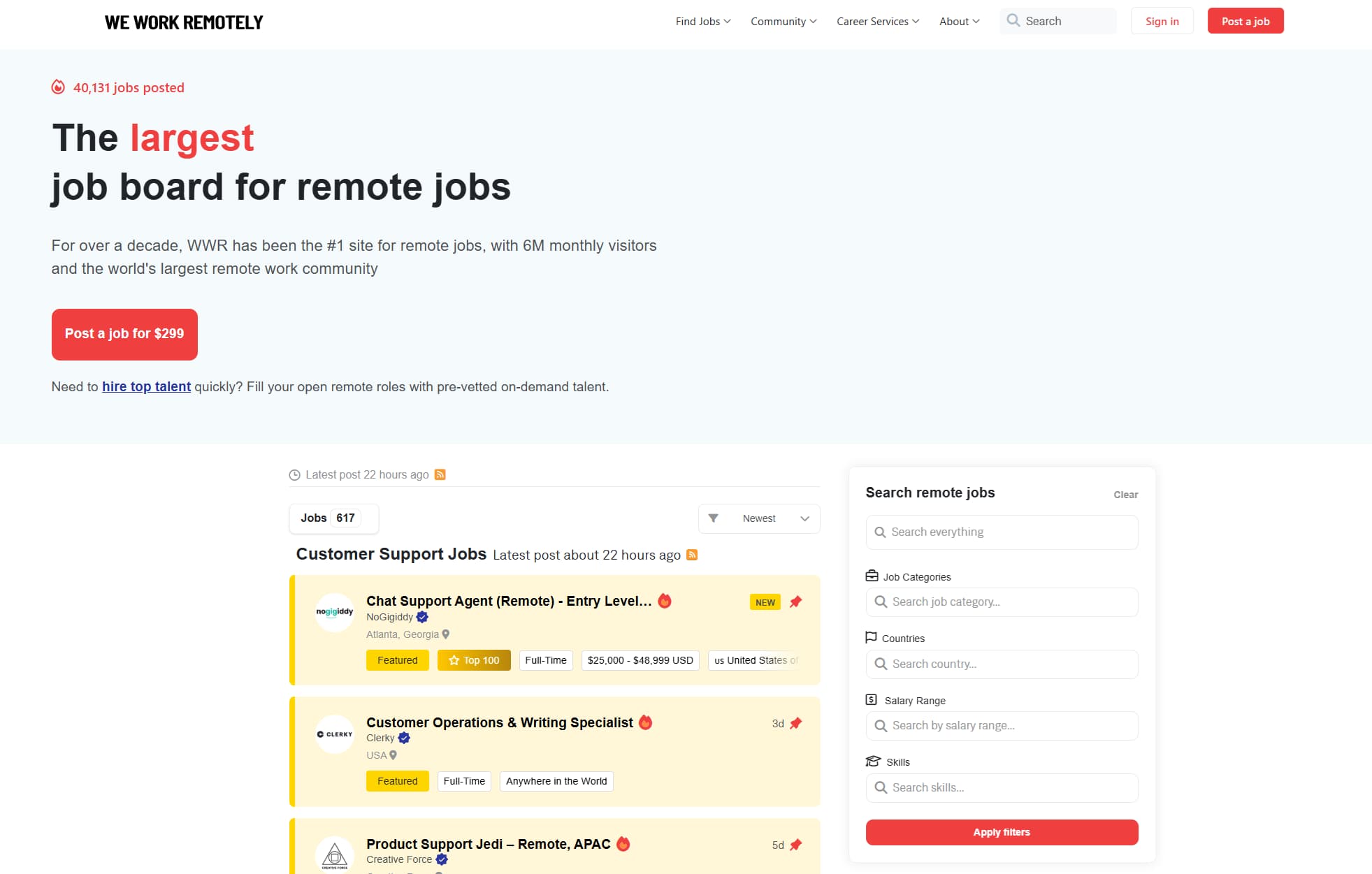
- Tech: Dice, Arc.dev, We Work Remotely
- Creative: Behance, Dribbble
- Healthcare: Health eCareers
- Remote work: FlexJobs, We Work Remotely
- Startups: Wellfound (formerly AngelList Talent)
Niche boards are often more profitable per listing than general boards because employers are willing to pay a premium to reach a focused, relevant audience.
Job Aggregators
Aggregators don’t host original job listings. Instead, they crawl and index listings from company career pages, job boards, and other sources, pulling them into one searchable interface.
Examples: Indeed (also functions as an aggregator), Google for Jobs, Jooble
The line between aggregators and job boards has blurred — Indeed started as a pure aggregator but now hosts direct listings too.
Company Career Pages
Many companies run their own job boards on their websites. These aren’t third-party platforms — they’re owned and operated by the employer directly. They give companies full control over branding and candidate experience, but they lack the built-in traffic that established job boards provide.
Freelance and Gig Platforms
These platforms focus on short-term, contract, or freelance work rather than traditional full-time employment.
Examples: Upwork, Fiverr, Toptal, PeoplePerHour
While technically different from traditional job boards, they serve the same core function — connecting people who need work done with people who can do it.
Job Boards vs Job Search Engines
This is a common point of confusion. A job board hosts listings that employers post directly to the platform. A job search engine aggregates listings from multiple sources across the web.
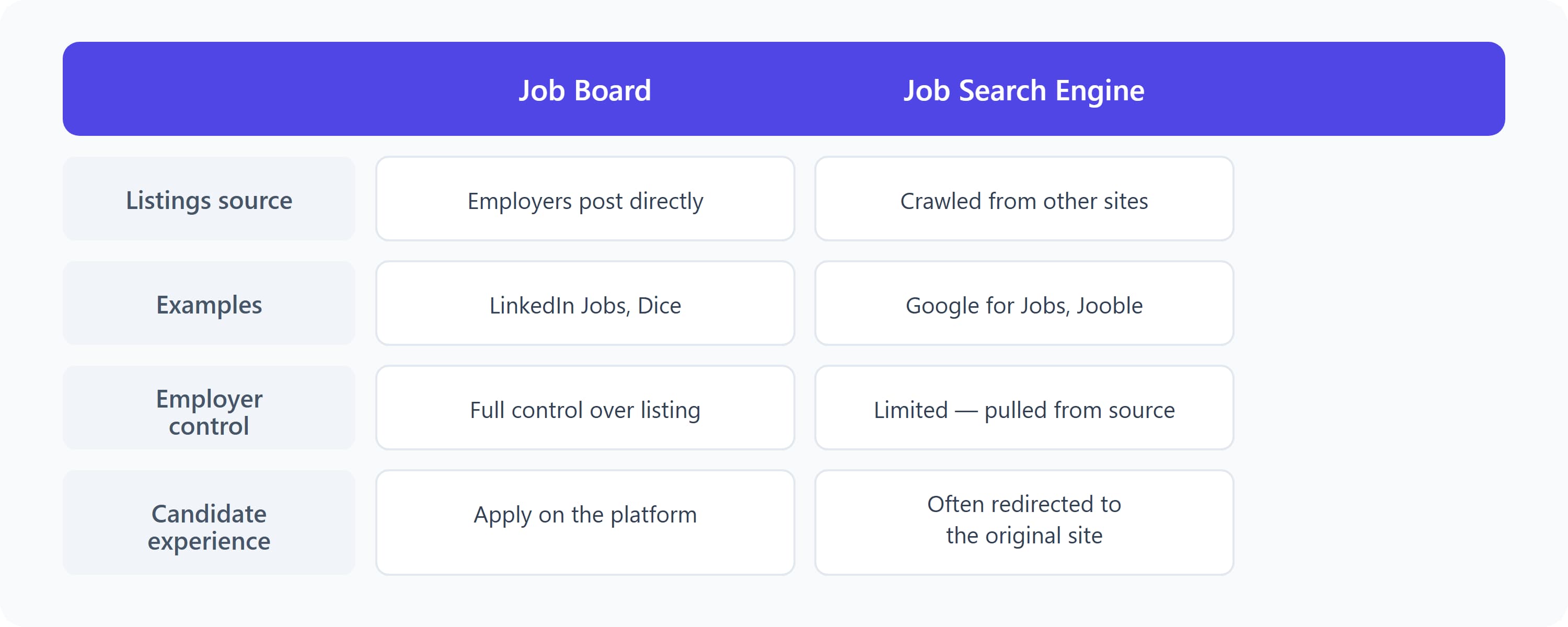
Some platforms blur the line. Indeed started as a job search engine (aggregator) but now also lets employers post directly, making it both a job board and an aggregator.
Job Boards vs Staffing Agencies
Staffing agencies and job boards both connect employers with candidates, but they work very differently.
A job board is self-service. Employers post listings, candidates apply, and the two sides communicate directly. The job board facilitates the connection but doesn’t manage the hiring process.
A staffing agency actively recruits on behalf of the employer. They screen candidates, conduct interviews, and present a shortlist. This hands-on service comes at a much higher cost — agencies typically charge 15–25% of the candidate’s first-year salary.
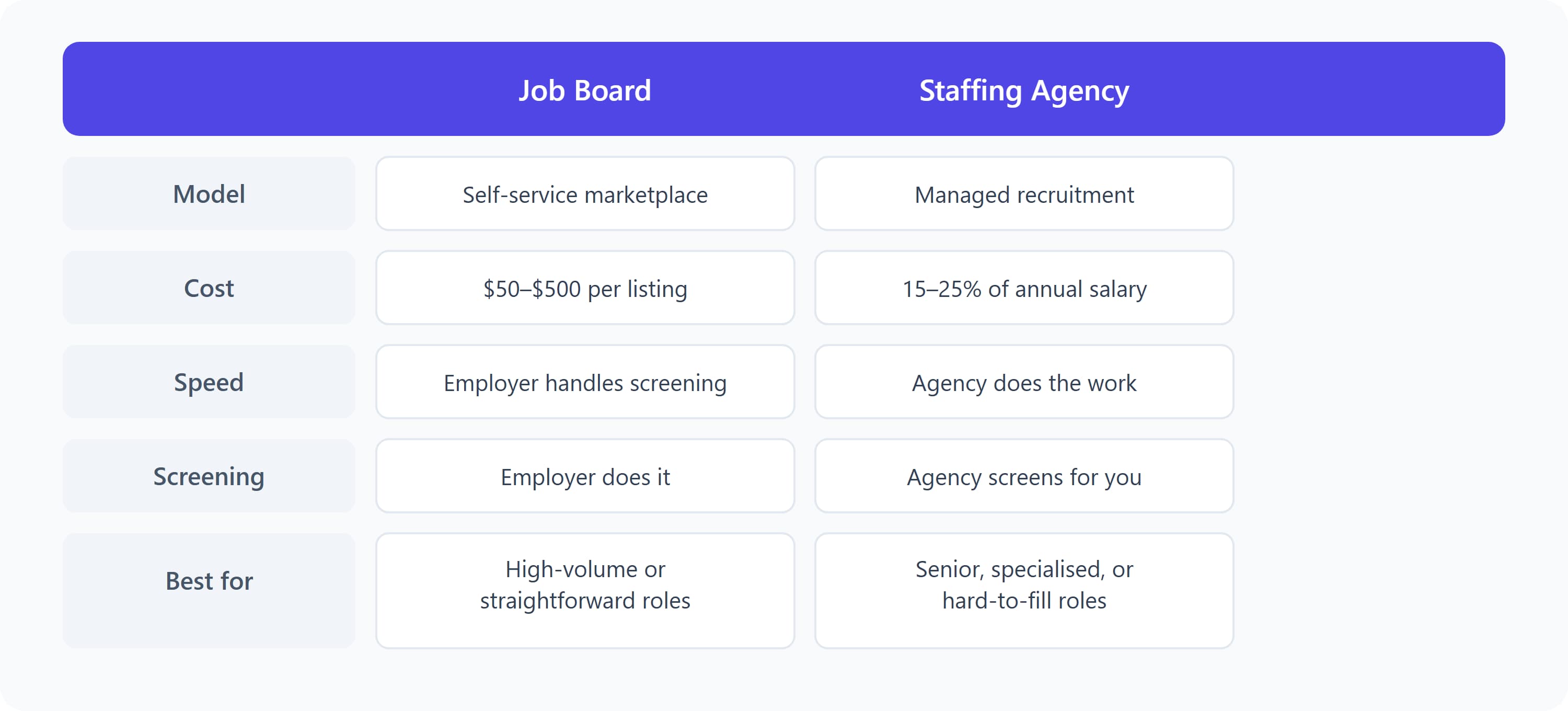
Many employers use both — job boards for volume hiring and agencies for critical or niche positions.
Job Boards vs Company Career Pages
A company career page is a section of a company’s own website listing their open roles. A job board is a third-party platform listing roles from many companies.
The key difference is reach. A career page only attracts people who already know about the company and visit their site. A job board has its own traffic — thousands or millions of job seekers browsing regularly — which gives employers access to candidates who might never have found them otherwise.
Most companies use both: they maintain a career page for direct applicants and post to job boards for broader visibility.
Benefits of Job Boards
For Job Seekers
- One place to search. Instead of checking dozens of company websites, you can search thousands of listings in one place.
- Filters and alerts. Narrow results by location, salary, job type, experience level, and more. Set alerts to get notified when relevant jobs appear.
- Discovery. Find companies and roles you wouldn’t have known about otherwise.
- Easy applications. Most boards let you apply with a saved profile and resume in a few clicks.
- Market research. See what roles are available, what they pay, and what skills are in demand — even if you’re not actively looking.
For Employers
- Access to active candidates. People on job boards are actively looking for work, which means higher response rates than cold outreach.
- Targeted reach. Niche job boards let you reach the exact audience you need without paying for irrelevant exposure.
- Cost-effective. Compared to staffing agencies (15–25% of salary), job board listings typically cost $50–$500 per posting or a flat monthly subscription.
- Employer branding. Your listing is a chance to showcase your company culture, benefits, and values to potential candidates.
- Speed. A listing can go live in minutes and start attracting applications immediately.
How Job Boards Make Money
Job boards use several revenue models, often in combination:
Pay-Per-Post
Employers pay a flat fee for each job listing. This is the simplest model and the most common starting point for new job boards. Prices typically range from $50 to $500 per listing depending on the board’s audience and reach.
Subscription Plans
Employers pay a monthly or annual fee for a set number of listings or unlimited posting. This provides predictable recurring revenue for the board and a better deal for high-volume employers.
Featured or Sponsored Listings
Employers pay extra to have their listing appear at the top of search results, in a highlighted section, or in email digests sent to job seekers. This is a high-margin upsell because the cost of providing it is nearly zero.
Resume Database Access
Some boards charge employers for access to candidate profiles and resumes. This lets recruiters proactively search for and contact candidates rather than waiting for applications.
Advertising
Display advertising, banner ads, and sponsored content from related businesses (HR software, training providers, recruitment tools) can supplement core job listing revenue.
Pay-Per-Application or Pay-Per-Click
Instead of paying upfront for a listing, employers pay each time a candidate applies or clicks through to the listing. This performance-based model is attractive to employers because they only pay for results.
How to Use a Job Board Effectively
Tips for Job Seekers
- Use specific keywords. Search for job titles, skills, or technologies rather than broad terms. “React developer” will give you better results than “developer.”
- Set up alerts. Don’t check manually every day. Most boards let you create email alerts for saved searches so you hear about new listings immediately.
- Complete your profile. Many employers search candidate profiles directly. A complete profile with a current resume makes you discoverable.
- Don’t rely on one board. Different boards attract different employers. Use a mix of general and niche boards relevant to your field.
- Apply early. Listings get the most applications in the first few days. Applying early increases your chances of being seen.
- Research the company. Before applying, look up the company on Glassdoor, LinkedIn, and their own website. A tailored application always outperforms a generic one.
Tips for Employers
- Write clear, specific job titles. “Senior Backend Engineer (Python)” performs better than “Tech Wizard Wanted.”
- Include salary information. Listings with salary ranges get significantly more applications. Candidates skip listings that hide compensation.
- Post on niche boards. If you’re hiring for a specialized role, a niche board will deliver more qualified candidates than a general one — often at a lower cost.
- Keep listings fresh. Remove filled positions promptly and repost or refresh active listings. Stale listings damage your employer brand.
- Use structured data. Adding JobPosting schema (JSON-LD) to your listings helps them appear in Google for Jobs, dramatically increasing visibility at no extra cost.
Other Names for Job Boards
Job boards go by several names depending on the context:
- Job site — the most common informal term
- Employment board — more formal, sometimes used in government contexts
- Career portal — often used for company-run career pages
- Job marketplace — emphasises the two-sided nature of the platform
- Recruitment platform — focuses on the employer side
- Talent board — less common, used in HR circles
- Jobs portal — common in the UK and Australia
They all refer to essentially the same thing: a platform where jobs are listed and candidates can find and apply for them.
The Future of Job Boards
Job boards have been around since the mid-1990s (Monster.com launched in 1994), and the model continues to evolve:
- AI matching. Platforms are increasingly using artificial intelligence to match candidates to roles based on skills, experience, and preferences — not just keyword matching.
- Niche dominance. The trend is moving away from one-size-fits-all boards toward highly specialized platforms serving specific industries, skill sets, or communities.
- Google for Jobs. Google’s job search feature aggregates listings directly in search results, making structured data and SEO critical for job board visibility.
- Remote-first. The shift to remote work has expanded the geographic scope of job boards and created demand for platforms specifically focused on remote roles.
- Employer branding. Job boards are evolving from simple listing directories into platforms where employers can showcase culture, benefits, and employee reviews alongside their openings.
- Pay-for-performance. More boards are shifting from flat-fee posting to pay-per-click or pay-per-application models, aligning costs with results.
Despite competition from LinkedIn and Google, standalone job boards continue to thrive — particularly niche boards that serve specific communities better than any general platform can. That shift has also lowered the barrier to entry: modern no-code job board software lets anyone launch a niche board in minutes, without the custom development that early job sites required — and developers who prefer self-hosting can start from open-source job board software instead.
FAQ
What is a job board in simple terms?
A job board is a website where employers post job openings and people looking for work can search and apply for those jobs. It works like a marketplace that connects the two sides of hiring.
What is an example of a job board?
Indeed, LinkedIn Jobs, and Glassdoor are well-known general job boards. Niche examples include Dice (tech jobs), Behance (creative roles), and We Work Remotely (remote positions). There are also thousands of smaller, industry-specific boards serving focused communities.
What is another name for a job board?
Common alternatives include job site, employment board, career portal, recruitment platform, and jobs portal. The terms are largely interchangeable.
What is the difference between a job board and a job search engine?
A job board hosts listings posted directly by employers. A job search engine (like Google for Jobs) aggregates listings from many sources across the web. Some platforms, like Indeed, function as both.
Are job boards free to use?
For job seekers, almost all job boards are free. For employers, it depends on the platform. Some boards offer free basic listings, while others charge per post, per click, or via subscription plans.
How do job boards make money?
Most job boards make money through paid job listings, subscription plans, featured/sponsored placements, resume database access, and advertising. Some use pay-per-click or pay-per-application models where employers only pay for results.
What does “job board” mean?
The term “job board” means an online platform where employers list job openings and candidates search and apply for them. The name comes from the physical bulletin boards where job ads were once pinned up — today’s job boards do the same thing digitally, at scale.
What is an online job board?
An online job board is a website where employers post vacancies and job seekers browse and apply over the internet. Since nearly all job boards now operate online, “online job board” and “job board” mean the same thing — “online” simply distinguishes it from the printed listings and physical noticeboards that came before.
Before you go: launch your
job board in 10 steps
Get the free interactive checklist + insider tips on building a profitable job board sent to your inbox.