Building successful job boards starts with choosing the right niche. With over 50,000 job boards competing for attention, focusing on high-demand, low-competition keywords is essential. Here's a quick overview of 10 job board niches with strong keyword demand and employer interest:
- Data Entry Jobs: 229,000 monthly searches, 48% keyword difficulty.
- Online Jobs for Students: 105,000 searches, 49% difficulty.
- Civil Engineering Jobs: 55,000 searches, 3% difficulty.
- Warehouse Jobs: 74,000 searches, 30% difficulty.
- Cyber Security Jobs: 50,000 searches, 53% difficulty.
- Data Analyst Jobs: 49,000 searches, 17% difficulty.
To succeed, aim for niches with:
- Low keyword difficulty (<20%) and high search volume.
- Employer willingness to pay for job posts (e.g., $125–$600 per post for technical roles).
- Features like mobile-friendly design, advanced filters, and salary transparency to meet job seeker needs.
For a deeper dive into job boards, you can explore our complete job board guide to learn how to build, launch, and grow a successful job board.
Pro Tip: Use tools like Semrush or Ahrefs to identify niches with manageable competition. Platforms like Job Boardly can help you launch quickly with prefilled listings and SEO tools (including backfilling your job board to ensure it never looks empty), starting at just $40/month.
Quick Comparison:
| Niche | Monthly Searches | Keyword Difficulty | Employer Willingness to Pay |
|---|---|---|---|
| Data Entry Jobs | 229,000 | 48% | $80–$157 |
| Online Jobs for Students | 105,000 | 49% | $80–$157 |
| Civil Engineering Jobs | 55,000 | 3% | $125–$595 |
| Warehouse Jobs | 74,000 | 30% | Varies |
| Cyber Security Jobs | 50,000 | 53% | $199–$600 |
| Data Analyst Jobs | 49,000 | 17% | $119–$450 |
Choose a niche with strong demand and low competition, then tailor your platform to job seekers and employers for the best results.
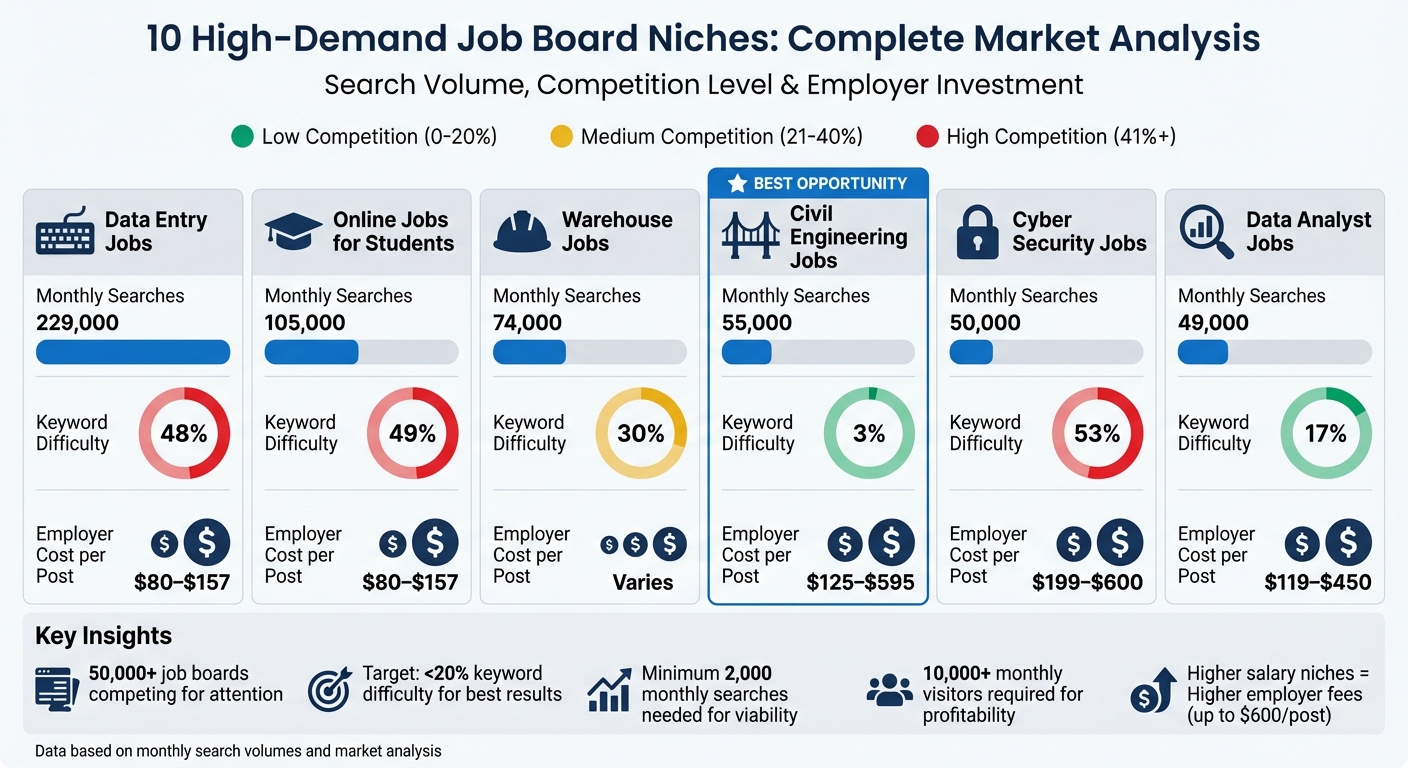
10 Job Board Niches Comparison: Search Volume, Keyword Difficulty, and Employer Pricing
How to Start a Niche Job Board With 80% Margins
1. Keyword Demand
Let’s dive into 6 job board niches that strike a balance between high search volume and achievable ranking potential. These niches represent markets where job seekers are actively searching, and employers are ready to invest in visibility.
Data Entry Jobs
This niche sees a global search volume of 229,000 per month and a keyword difficulty of 48%. Interestingly, the top results are dominated by general platforms like Indeed, leaving room for a specialized no-code job board to better serve this audience.
The data entry field attracts remote workers and employers looking for cost-effective administrative support. Job seekers often prioritize flexibility and work-from-home options, while employers need quick access to dependable candidates for short-term tasks or ongoing projects. This creates a perfect opportunity for a niche platform tailored to these needs. Let’s now look at a niche that caters to students juggling academics and work.
Online Jobs for Students
With 105,000 monthly searches and a keyword difficulty of 49%, this niche targets job seekers who need roles that fit around their studies. Employers in this space are willing to pay between $80 and Employers in this space are willing to pay between $80 and $157 per job post57 per job post, often managed through a customizable paywall, highlighting the value they place on reaching this audience.
Students often seek part-time roles, internships, or gig work that offer flexible schedules and remote options. They typically prioritize opportunities that help them build skills over those with high salaries. A job board catering to this group should focus on roles that align with academic calendars and provide entry-level experience. Now, let’s turn to a technical niche with strong demand and minimal competition.
Civil Engineering Jobs
This niche stands out with 55,000 monthly searches and an impressively low keyword difficulty of 3%. Employers here are willing to pay between $125 and $595 per job post, reflecting the specialized nature of these roles and the higher salaries involved.
As Marty Aghajanyan from JBoard explains:
"The higher the average salary of the position is, the more you can charge employers per job post."
Civil engineering job seekers need postings that include detailed technical requirements, location specifics (since many roles are site-based), and any necessary certifications or licenses. A niche board should offer filters for engineering specialties, project types, and geographic regions, making it easier for candidates to find the right fit.
2. Market Dynamics
Warehouse Jobs
The warehouse job market sees about 74,000 monthly searches and has a keyword difficulty of 30%. While general job platforms dominate the search results, specialized boards have an opportunity to cater to the unique needs of local markets.
This sector is marked by high turnover and seasonal demand spikes, with job hopping being a common trend. Employers often require a steady stream of candidates to meet these challenges. To help fill these roles quickly, site owners can automatically backfill job listings to maintain a high volume of active opportunities. On the other hand, job seekers in this space tend to prioritize factors like proximity to the workplace, flexible shifts, and quick hiring processes. A niche job board that integrates local search filters and offers a mobile-friendly experience can effectively address these needs and stand out in this competitive landscape.
Cyber Security Jobs
Cyber security jobs attract around 50,000 monthly searches with a keyword difficulty of 53%. Employers in this field are willing to pay $199 to $600 per job post, reflecting the high demand for specialized talent with security expertise.
Professionals in this sector often focus on postings that clearly outline required certifications - such as CISSP or CEH - along with clearance levels and the specific technology stacks they’ll work with. With the rise in digital threats, employers are increasingly reliant on job boards that can verify candidate credentials and provide advanced technical filters. A well-designed platform tailored to these needs can ensure precise matches and help both employers and job seekers navigate this rapidly evolving field.
Data Analyst Jobs
Data analyst roles draw approximately 49,000 monthly searches and have a relatively low keyword difficulty of 17%. Employers typically pay between $119 and $450 per job post, driven by the increasing reliance on data across industries.
This market benefits from the broader shift toward remote work and the growing importance of business intelligence. Job seekers range from entry-level candidates transitioning from other fields to experienced professionals seeking better opportunities. A job board that categorizes roles by industry and experience level, while also highlighting required skills like SQL, Python, or tools such as Tableau, can make job searches more efficient and help employers find the right talent. This structured approach aligns with the evolving demands of the data-driven economy.
sbb-itb-316a34c
3. Job Seeker Needs
Mobile-First Search and Real-Time Alerts
More and more job seekers rely on their mobile devices to hunt for opportunities. A platform designed with mobile users in mind - offering real-time notifications for job postings that match specific keywords - ensures candidates stay ahead of the curve. This is especially important in fast-paced industries like warehouse jobs, where positions can be filled within hours. Features such as alerts for certification requirements or location-based proximity filters help keep candidates engaged and informed. A focus on mobile functionality naturally ties into the demand for advanced search and tracking tools.
Advanced Filtering and Application Tracking
Niche job boards thrive when they provide advanced filtering options. Candidates benefit from filters that cater to specific needs, such as skill sets, security clearances, remote-only positions, or varying levels of experience. Additionally, an integrated application tracker can make the process far less overwhelming by managing application statuses, scheduling interviews, and saving search criteria. Tools like bookmarking and calendar-integrated interview scheduling streamline the job hunt, allowing candidates to juggle multiple opportunities without missing a beat.
Portfolio Integration and Professional Branding
Beyond search tools, how candidates present themselves is a game-changer - especially for technical and creative roles. Job boards that allow users to showcase their work, such as linking to GitHub for data analysts or design portfolios for creative professionals, give candidates an edge. SynergisticIT highlights this approach perfectly:
"It's not about volume; it's about readiness - if you're not getting replies, the answer usually isn't 'apply more,' it's 'show more'".
Resume parsing tools save candidates time, while privacy options let them control who can access their information. By focusing on showcasing skills and accomplishments, job seekers can stand out in competitive fields.
Upskilling Resources and Salary Transparency
Meeting the evolving needs of job seekers is essential for any niche job board. Over the past three years, job postings requiring new skills have jumped by 32%. Offering features like skill assessments, mock interviews, and industry-specific training directly on the platform helps candidates stay competitive. Salary transparency tools, such as benchmarks and budget calculators, allow job seekers to quickly evaluate roles and negotiate with confidence. By integrating these resources, job boards can transform simple listings into comprehensive career-building platforms that drive better hiring outcomes.
Conclusion
Building a successful niche job board comes down to choosing the right focus, understanding your market, and catering to the needs of job seekers. The key is to pinpoint specialized industries where large platforms like Indeed or Monster fall short in delivering tailored value to specific communities. Aim for keywords with low competition (ideally a difficulty score below 20%) and a minimum of 2,000 monthly searches. This helps you avoid oversaturated markets while ensuring there's enough demand to make your board viable.
Look for niches where generic job boards dominate, as this often signals a gap you can fill. Industries with higher average salaries also tend to offer better monetization opportunities. For example, medical job postings can command fees of $600 or more, whereas construction job ads typically range between $95 and $300. To achieve financial success, your board will generally need to attract at least 10,000 visitors each month.
Meeting job seekers' expectations is equally important. Features like advanced filtering options, mobile-friendly designs, portfolio uploads, application tracking, and transparent salary information can transform a basic job board into a career platform that users trust and recommend. With these elements in place, starting a job board becomes much easier.
If you're ready to get started, platforms like Job Boardly can help. They let you set up a fully customized job board with prefilled listings in just minutes - no coding required. With features like paywalls, Stripe integration, SEO tools, and job backfilling, plans start at $40 per month.
Whether you're exploring niches like civil engineering jobs - which see 55,000 monthly searches and have a keyword difficulty of just 3% - or considering roles like data analysts, the right tools make it simple to test your idea without a large upfront investment.
Choose your niche, understand your audience, and create a platform that stands out.
FAQs
How can I choose the best niche for my job board?
To pick the right niche for your job board, start by focusing on industries or fields that excite you or have noticeable hiring gaps. Use tools like Google Keyword Planner or Ahrefs to uncover niche-specific keywords that get 2,000 to 10,000 monthly searches. Look for terms with low competition and clear hiring intent, such as “remote biotech jobs” or “AI prompt engineer openings.” This approach helps ensure your job board attracts steady, SEO-driven traffic.
Next, assess the market potential of your niche. Consider the size of the talent pool, growth trends (like AI, renewable energy, or remote work), and whether employers are willing to invest in targeted job postings. To validate your idea, try posting sample job listings or running small ad campaigns to gauge interest and demand. A well-defined niche not only makes it easier to market to a specific audience but also helps you stand out in search rankings. Platforms like Job Boardly can streamline the process with built-in tools for SEO, paywalls, and job aggregation, making it easier to monetize your job board from the start.
What are the key features of a successful niche job board?
A successful niche job board needs to strike a balance between essential functionality and tools tailored to its specific audience. At the core, job posting management is key. This includes giving employers the ability to create, edit, and highlight listings with options like featured placements. Payment processing is another must-have, allowing the platform to generate revenue through job postings, premium features, or subscription plans. To ensure the board stays active and relevant, features like job backfilling and aggregation can help keep listings fresh, even during slower periods. Additionally, a search-engine-friendly structure with clean URLs and optimized pages is critical for driving organic traffic.
Customizability plays a significant role in creating a professional and audience-specific platform. Features like niche-focused design, branding options, multi-language support, and custom domains help the board connect with its target users. For job seekers, tools such as saved searches, early alerts, and resume-building features enhance their experience. Employers, on the other hand, benefit from access to resume databases and analytics dashboards to measure performance. To boost revenue, incorporating tiered pricing, subscription options, and sponsored content can make a significant difference. When these elements come together, the result is a platform that not only serves its community effectively but also generates steady income.
How can I attract both job seekers and employers to my job board?
To draw in both job seekers and employers, start by narrowing your focus to a specific niche. This could be an industry, a particular role type, or a hiring model with strong keyword demand. Aim for a niche with at least 2,000 monthly searches for your main keyword. Why? It boosts your chances of ranking higher in search engines and ensures you're reaching a highly relevant audience. Don't forget to optimize your site for SEO - this means refining titles, meta descriptions, and even using Google Jobs schema to capture organic traffic.
For employers, showcase the value of your platform by highlighting your specialized audience. Offer flexible job posting options like tiered packages, premium listings, and extras such as access to a resume database or employer branding tools. On the flip side, make the experience seamless for job seekers. Features like job alerts, an easy-to-navigate interface, and resources like resume-writing tips or early-access job postings can make all the difference.
To build momentum, promote your job board through targeted content, partnerships with relevant industry groups, and steady SEO efforts. A well-defined niche paired with useful features for both employers and job seekers creates a win-win situation, encouraging ongoing engagement with your platform.